What Mobile Games Are Trending Among Nigerian Youths in 2026
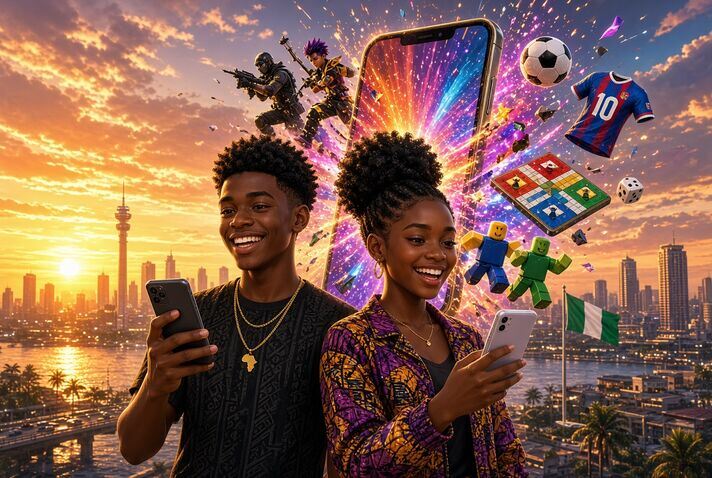
What Mobile Games Are Trending Among Nigerian Youths in 2026 What’s Reigning on Nigerian Phones Right Now 🇳🇬📱 Walk through any campus, bus park, or evening hangout in Lagos, Abuja, or Port Harcourt and you’ll see the same glow. Thumbs flying. Occasional shouts of “No be so!” or pure silence as someone clutches a last-second clutch. Mobile gaming isn’t a side hobby here. For a huge slice of Nigerian youth, it’s the main event. Here’s what’s actually dominating screens in 2026 — with direct links baked right into every game name so you can jump straight into the action. The Current Heavyweights 🔥 Free Fire The battle-royale king that runs on almost any phone. Short matches, smooth performance, and a massive community make Free Fire the default for squad play and ranked grinds. ⚽ Football Games (Because Football Is Life) In a country that treats football like a second religion, these titles feel less like games and more like extensions of the real thing. Dream League Soccer 2026 – Currently leads the free-games charts in Nigeria. Build your dream team, grind career mode, and chase that perfect match. eFootball – The classic football sim, now mobile. Football League 2026 – Another strong contender for career-mode fans. Find it on Google Play. 🎲 Local Flavour That Never Dies Same board, same arguments, same “I almost finished you” energy — now online and with that Naira-flavoured twist. Ludo Naira – Relive childhood memories with online multiplayer and real-money stakes. Naija Ludo – Classic dice-and-race fun for all ages, made in Nigeria. Naija Whot – The go-to card game for quick, trash-talk-filled rounds. Find it on Google Play. 🧱 Roblox Roblox has quietly become a big deal among teenagers. Its open-ended worlds and user-created experiences give younger players a place to hang out, create, and socialize in ways traditional shooters don’t. 🔫 The Regular Rotation (Different Moods, Different Devices) Call of Duty: Mobile – Fast-paced FPS action with battle royale and multiplayer modes. PUBG Mobile – The original mobile battle royale, still huge. Subway Surfers – Endless running fun for quick sessions. 8 Ball Pool – Classic pool with online multiplayer. 🧠 Why These Ones Stick Accessibility matters more than graphics. Free Fire’s low system demands, Ludo’s simplicity, and football games’ cultural pull create low barriers. Social features — voice chat, clans, leaderboards, local multiplayer — turn solitary phone time into something shared. And the always-on nature of mobile means the next match or next round is never more than a few taps away. These games are engineered to hold attention. Variable rewards, daily streaks, progression systems, and social ranking keep the brain engaged. The same design that makes a Free Fire session or Dream League career feel satisfying can also make it hard to put the phone down. ⚠️ The Other Side of the Screen We’ve started seeing the real-world cost of that stickiness. Studies among Nigerian secondary-school students and undergraduates have linked compulsive gaming to loss of concentration, poorer academic performance, reduced physical activity, less time with family and friends, and higher social anxiety in some groups. One study in Calabar found over a third of in-school adolescents showing signs of compulsive play, with many reporting it affecting their schoolwork and relationships. Sleep loss and the quiet displacement of other activities show up repeatedly in conversations with parents and teachers. None of this erases the skill, community, or pure fun these games deliver. Free Fire squads form real friendships. Dream League careers become long-running personal stories. Ludo sessions keep people connected across distance. The games are genuinely entertaining for millions. They just don’t come with a natural off switch. Knowing which titles are currently lighting up Nigerian phones is useful. Knowing how sticky they can become is useful too. 🎮 Ready to Play? Tap any game name above to download and join the millions already in the action. Whether you’re building a football dynasty, dropping into Free Fire, or rolling dice in Ludo Naira — your next match is waiting. Play smart. Play fun. And remember: the game should serve you, not the other way around. Other Links What Mobile Games Are Trending Among Nigerian Youths in 2026 What Mobile Games Are Trending Among Nigerian Youths in 2026… Read More September 5, 2026 Mobile Games Are Taking Over Mobile Games Are Taking Over At 11:47 p.m., someone who… Read More August 29, 2026 50 Loan Apps Changing How the World Borrows Money 50 Loan Apps Changing How the World Borrows Money Getting… Read More August 24, 2026 Why Nigerians Are Quietly Holding Dollars in Stablecoins Instead of Naira Why Nigerians Are Quietly Holding Dollars in Stablecoins Instead of… Read More August 20, 2026 Load More
Mobile Games Are Taking Over
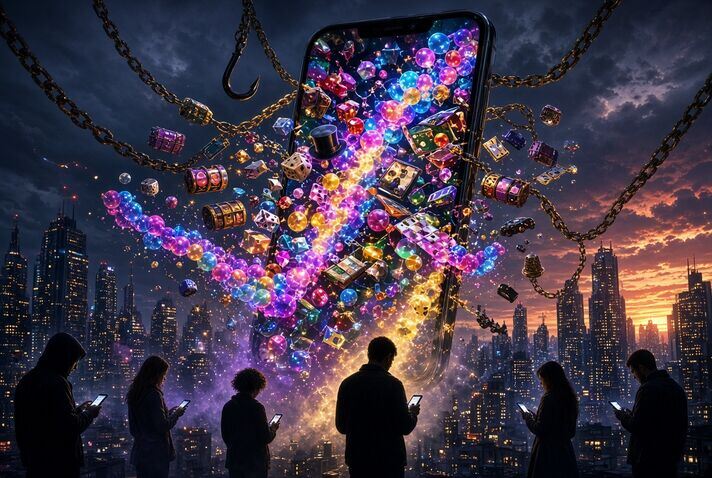
Mobile Games Are Taking Over At 11:47 p.m., someone who promised themselves they would play for ten minutes is still staring at their phone. One more round. One more reward. One more roll. One more attempt to overtake the person above them on the leaderboard. The phone is small. The industry behind it is enormous. Mobile gaming has evolved from simple time-killers into one of the world’s most sophisticated entertainment businesses. And some of the mechanics driving that growth have far more in common with casinos, behavioural psychology and social media than the old-fashioned video games many of us grew up with. The interesting part is that most of these games don’t look dangerous. Some look like solitaire. Some look like Monopoly. Some look like colourful farming games. Some are played by children. Others can actually pay you money. And increasingly, the question isn’t simply whether these games are fun. It’s whether they have become too good at keeping us playing. The mobile gaming boom has changed shape Mobile gaming is no longer just about downloading a game and playing it when you’re bored. A new category has exploded around cash-prize competitions, sweepstakes and skill-based gaming. Apps such as Solitaire Cash, 21 Blitz, Blackout Bingo, Bingo Cash, 8 Ball Strike and Bubble Cash take familiar formats — solitaire, bingo, pool and card games — and turn them into competitive tournaments. The basic formula is remarkably simple. Pay an entry fee. Play against other people. Climb the leaderboard. Win money. Depending on the game and jurisdiction, withdrawals may be available through services such as PayPal, Venmo or Apple Pay. That model is commercially powerful because it gives players something traditional mobile games cannot: a reason to care immediately. You’re not simply trying to beat a level. There may be money on the line. That has helped create a fast-growing lane of mobile entertainment that deliberately sits near the boundary between gaming, sweepstakes and gambling. The legal classification varies by jurisdiction and by how a particular product operates. But commercially, the attraction is obvious: familiar games become much more exciting when every match feels like it matters. And the same psychological principle appears in games where no real money changes hands. The games that don’t look like gambling Consider MONOPOLY GO! It is one of the clearest examples of how an apparently harmless mobile game can become a remarkably sophisticated engagement machine. The game takes the familiar Monopoly formula and wraps it in dice rolls, events, collections, social interaction, limited-time challenges and an enormous virtual economy. Its success is difficult to overstate. Sensor Tower estimates that MONOPOLY GO! passed $6 billion in lifetime in-app purchase revenue during 2025, making it the fastest mobile game ever to reach that milestone. Appfigures reported that it was the world’s highest-earning mobile game in January 2026, generating an estimated $134 million in net revenue that month. The dice roll is the important part. You don’t know exactly what will happen. You tap. The dice move. You wait. And then you discover whether the roll gives you what you wanted. That tiny period between action and outcome is psychologically valuable. Scopely has previously described deliberately designing MONOPOLY GO!’s dice mechanic around maintaining a player’s “flow state” — the immersive condition in which someone becomes deeply absorbed in an activity. The company said the dice system took more than a year to develop. That is not an accident. The game is engineered around anticipation. And anticipation can be more powerful than the reward itself. Gossip Harbor and Township Gossip Harbor and Township look much less like gambling. They are casual, colourful games built around stories, building, farming, collecting and progression. But modern free-to-play games increasingly share the same underlying architecture: timed rewards virtual currencies surprise prizes limited-time events upgrade systems daily missions collections increasingly difficult progression None of those mechanics is automatically harmful. Together, however, they create a system in which there is almost always a reason to return. Research and regulatory reviews have increasingly focused on this wider ecosystem of loot boxes and chance-based rewards. The UK government’s review of loot boxes noted that more than half of the top 100 grossing mobile games in both Apple’s and Google’s app stores contained loot boxes. The significance isn’t that every loot box is a gambling machine. It is that uncertainty itself has become a monetisation strategy. Roblox, Fortnite and Minecraft: the endless-game problem Then there are the giants. Roblox. Fortnite. Minecraft. These aren’t simply games anymore. They are digital environments where people spend enormous amounts of time creating, competing, socialising and exploring. Roblox Roblox is particularly interesting because it is essentially a platform containing millions of user-created experiences. One game can be completely different from the next. That variety is its superpower. But it also means the player has no obvious reason to stop. There is always another experience. Another server. Another reward. Another thing to buy with Robux. And some Roblox experiences have been criticised for using chance-based mechanics and loot-box-style systems that resemble gambling. Recent reporting has intensified scrutiny of these mechanics, particularly because of Roblox’s enormous young-user population. The hardest part to put down? There is no real ending. Fortnite Fortnite transformed from a battle-royale game into something closer to a digital entertainment platform. Players compete, socialise, attend events, collect cosmetics and progress through seasonal systems. The battle pass is particularly effective because it creates a countdown. You have paid for the season. You have rewards waiting. The season ends soon. Every unfinished reward suddenly feels like something you are losing. The mechanic turns time into a resource. Minecraft Minecraft takes a different approach. There is no conventional final boss waiting at the end of the experience. You build. Explore. Mine. Farm. Automate. Create. Then you decide what to do next. Its strength is also its retention mechanism: there is always something else to build. You can start playing at 8 p.m. and suddenly discover that it is midnight because there was never a
The Day a Phone Camera Started Seeing Like a Friend
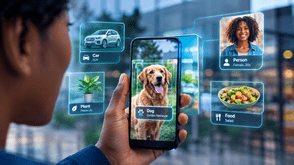
Computer vision breakthroughs The Day a Phone Camera Started Seeing Like a Friend Somewhere in Denmark, a blind app user pointed her phone at a plate of food and asked what was on it. Seconds later, a voice told her: rice on the left, grilled chicken in the middle, a scoop of coleslaw on the right. No one was on the other end of the call. No human volunteer had picked up. It was software — looking, understanding, and describing, the way a good friend would. That’s the quiet, human side of one of the biggest breakthroughs in technology today: computer vision that finally sees the way we do. Computer vision breakthroughs So what exactly is this “breakthrough? Computer vision is simply the ability of a machine to look at an image or video and understand what’s in it — not just detect shapes and colors, but actually grasp context. Is that a ripe tomato or a diseased one? Is that a curb or a step? Is that document a receipt or a prescription? For years, computers could technically “see,” but clumsily. They needed huge, specialized datasets, expensive hardware, and perfect lighting to get it half right. What changed recently is that vision systems got fused with large language models — the same kind of AI that powers chatbots — so a camera doesn’t just label an object anymore. It reasons about it, explains it in plain language, and answers follow-up questions, all in real time, on an ordinary smartphone. Why people are calling it a breakthrough, and not just “another update” Three things came together at once, and that combination is what makes this moment different: Accuracy jumped dramatically. Text recognition from images now runs in the high-90s percent accuracy range, and general scene description is close behind, even in messy, everyday conditions rather than lab settings. It no longer needs special equipment. A regular phone camera is enough. No lab, no expensive scanner, no dedicated device required. It got fast enough to feel like a conversation. Answers now arrive in seconds, which is the difference between a novelty and a tool people actually build their day around. Put together, that’s the leap from “impressive demo” to “something millions of ordinary people now depend on.” Real people, real benefit It’s easy for AI headlines to feel abstract. So here’s where this breakthrough actually lands. Blind and low-vision users are gaining a kind of everyday independence that didn’t exist before. Apps like Be My Eyes now pair sighted volunteers with an AI assistant, Be My AI, that can describe a scene, read a label, or make sense of a confusing form, all from a single photo. Watch Hannah, who is blind, walk through her experience with the AI feature in her own words: https://www.youtube.com/watch?v=SRnrv_ygT3g Watch Stephen’s story, where a call for help turned into a moment of connection with his volunteer: https://www.youtube.com/watch?v=O4pzZRtXpVo Smallholder farmers are catching crop diseases before they wipe out a season’s income. Apps like Plantix let a farmer photograph a sick leaf and get an instant diagnosis, in their own language, with treatment steps attached. See how farmers describe using Plantix as their pocket crop doctor, on the app’s own channel: https://www.youtube.com/watch?v=q46V7qPfDRA These aren’t tech-industry showcases. They’re a blind woman navigating her day with confidence, and a farmer saving a harvest that feeds a family — on camera, in their own words. The companies actually pulling this off Talk is cheap in AI. These five have shipped working systems, with real deployments to point to: Google — Built the AI model behind diabetic retinopathy screening (originally developed with Aravind Eye Hospital in India and Rajavithi Hospital in Thailand), now powering over 600,000 eye screenings worldwide. Proof: https://blog.google/company-news/inside-google/around-the-globe/google-asia/arda-diabetic-retinopathy-india-thailand/ OpenAI — Partnered with Be My Eyes to build Be My AI, bringing GPT-4’s vision capabilities to hundreds of thousands of blind and low-vision users for free. Proof: https://www.bemyeyes.com/bme-ai/ Microsoft — Built Seeing AI, a free app that has helped with more than 10 million real-world tasks for blind and low-vision users since 2017, now expanded with generative AI descriptions. Proof: https://blogs.microsoft.com/accessibility/seeing-ai-app-launches-on-android-including-new-and-updated-features-and-new-languages/ Digital Diagnostics — Built LumineticsCore, the first-ever FDA-cleared fully autonomous AI diagnostic system in medicine, which independently diagnosed diabetic retinopathy for one in three patients tested in a 90-day period, without a doctor reading the image. Proof: https://www.digitaldiagnostics.com/ PEAT GmbH (Plantix) — Built the AI behind Plantix, now downloaded more than 10 million times, answering over 100 million crop-health questions from farmers worldwide. Proof: https://plantix.net/en/ Why this matters for the everyday man You don’t need to understand neural networks to benefit from this. If you’ve ever used your phone to scan a document, unlock your face instead of typing a password, or search “shoes like this” from a photo, you’ve already touched this breakthrough. What’s new is how far it now reaches — into hospitals doing quick eye screenings for diabetic patients who’d otherwise wait months for an appointment, into rural clinics, into pockets that never had access to an expert opinion before. That’s the real story here. Not smarter machines for their own sake, but a bit more dignity, speed, and certainty handed back to people who needed it most. Donate Somewhere in remote Africa, a child is dreaming of an education they can’t afford. Every dollar you donate goes directly toward putting books, teachers, and classrooms in front of students who have none. You’ve already given your time reading this — now consider giving a little more to change a child’s future. No amount is too small; donate below and make your generosity count. CASHAPP CashApp Donation $ 5181884036149 Popular PayPal PayPal Donation $ chrisklem30@gmail.com Great Local Transfer African Donation $ Paystack-Titan: 9719443563 Local Other Links AI for Drug Discovery AI for Drug Discovery How AI Is Changing the Search… Read More August 15, 2026 Launch an App in 48 Hours Using AI Launch an App in 48 Hours Using AI From Idea… Read More July 31, 2026 THE REAL ANNUAL EARNINGS