The Biggest AI Problem in Africa May Not Be AI
The Biggest AI Problem in Africa May Not Be AI Artificial intelligence (AI) is moving fast. Chatbots can write, software can generate code, computers can analyse medical information, and businesses are using AI to automate work that once required hours of human effort. Africa wants to be part of this transformation. And it should. But there is a problem we don’t talk about enough: You cannot build an AI-powered economy on digital infrastructure that is not strong enough to support it. The biggest AI problem in Africa may not be the AI itself. It may be electricity, internet access, computing power, skills and affordability. AI needs more than an app It is easy to think of AI as simply opening ChatGPT or another AI tool on your phone. But behind that simple screen is a huge technical system. AI models run on computers called servers. Servers are powerful computers that provide services and process information for other computers and users. Large AI systems require enormous amounts of compute, meaning computing power used to train and run AI models. These machines live in data centres — buildings filled with computers, networking equipment, cooling systems and power infrastructure. And all of this needs electricity. So when we ask whether Africa is ready for AI, we should not only ask: “How many people are using AI?” We should also ask: “Do we have the infrastructure to make AI widely useful and affordable?” 1. Electricity comes first This is the most basic problem. Computers need electricity. Data centres need a lot of electricity. AI systems need computing infrastructure, and computing infrastructure cannot operate without reliable power. The International Energy Agency (IEA) reported that electricity consumption by data centres increased by 17% globally in 2025, while electricity use by AI-focused data centres grew even faster. That matters for Africa because AI is not just about buying software. If a country wants to develop serious AI infrastructure, it needs reliable electricity to operate the physical machines behind it. This does not mean every African country needs to build giant AI data centres tomorrow. It means reliable and affordable electricity is part of the AI conversation. 2. The internet is still a barrier AI also needs connectivity. A person cannot use an online AI service effectively if their internet connection is unreliable, extremely slow or too expensive. The World Bank describes connectivity as the gateway to AI participation and highlights continuing differences in internet affordability, speed and usage between countries. The problem is therefore bigger than simply saying: “Africa needs more internet users.” People need internet connections that are good enough to actually use modern digital services. And they need devices capable of accessing those services. 3. Then there is compute This is one of the most important terms in the entire AI conversation. Compute simply means computing power. Think of it as the muscle that allows computers to perform difficult calculations. Modern AI systems can require specialised processors called GPUs, or Graphics Processing Units. GPUs are computer chips that can perform many calculations at the same time, making them particularly useful for AI workloads. The problem is that advanced computing capacity is heavily concentrated outside Africa. The United Nations Conference on Trade and Development (UNCTAD) says AI infrastructure requires computing power, servers and data centres, and notes that most supercomputers and data centres are located in developed countries. The World Bank also identifies compute as one of the major foundations needed for inclusive AI development. This creates an uncomfortable question: If Africa does not have enough affordable access to compute, how much AI can it build locally? Cloud computing — renting computing resources over the internet instead of owning the physical machines — can help. But relying heavily on computing infrastructure elsewhere also means Africa remains dependent on infrastructure it does not control. That is why compute is becoming a strategic issue. 4. Africa needs people who understand AI Hardware alone will not solve the problem. You can build a data centre and still have a shortage of people who know how to use, manage and develop the technology. AI needs different levels of skills. People need basic digital literacy, meaning the ability to confidently use digital devices and services. Businesses need people who understand how to apply AI to real problems. And advanced AI development requires specialists in areas such as machine learning (ML) — a branch of AI where computers learn patterns from data — as well as data science, software engineering and related fields. The African Development Bank’s recent AI roadmap identifies skills as one of the major foundations of Africa’s AI readiness and proposes a target of 3 million AI-capable professionals by 2030. This is why AI education cannot only be about teaching people how to write better prompts. People also need to understand how AI works, where it can be used, its limitations and how to build with it. 5. And then comes affordability This may be the issue ordinary people feel most directly. AI may exist, but can people afford the internet, electricity, smartphones, computers and services needed to use it? There is a difference between AI being available and AI being accessible. A powerful AI tool is not particularly useful to a student who cannot afford enough data to use it. It is not very useful to a small business whose electricity and internet costs are already difficult to manage. And it is difficult for a developer to build sophisticated AI products if access to powerful computing resources is prohibitively expensive. UNCTAD identifies affordable electricity, internet access, computing power, devices and digital skills as important parts of the infrastructure required for AI adoption. Africa does not have to copy Silicon Valley There is another important point. Africa does not need to reproduce the exact AI infrastructure of the United States or China to benefit from AI. There are opportunities to build smaller, practical systems around African problems. For example, AI can be applied to agriculture, education, healthcare, financial
The Day a Phone Camera Started Seeing Like a Friend
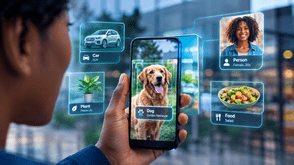
Computer vision breakthroughs The Day a Phone Camera Started Seeing Like a Friend Somewhere in Denmark, a blind app user pointed her phone at a plate of food and asked what was on it. Seconds later, a voice told her: rice on the left, grilled chicken in the middle, a scoop of coleslaw on the right. No one was on the other end of the call. No human volunteer had picked up. It was software — looking, understanding, and describing, the way a good friend would. That’s the quiet, human side of one of the biggest breakthroughs in technology today: computer vision that finally sees the way we do. Computer vision breakthroughs So what exactly is this “breakthrough? Computer vision is simply the ability of a machine to look at an image or video and understand what’s in it — not just detect shapes and colors, but actually grasp context. Is that a ripe tomato or a diseased one? Is that a curb or a step? Is that document a receipt or a prescription? For years, computers could technically “see,” but clumsily. They needed huge, specialized datasets, expensive hardware, and perfect lighting to get it half right. What changed recently is that vision systems got fused with large language models — the same kind of AI that powers chatbots — so a camera doesn’t just label an object anymore. It reasons about it, explains it in plain language, and answers follow-up questions, all in real time, on an ordinary smartphone. Why people are calling it a breakthrough, and not just “another update” Three things came together at once, and that combination is what makes this moment different: Accuracy jumped dramatically. Text recognition from images now runs in the high-90s percent accuracy range, and general scene description is close behind, even in messy, everyday conditions rather than lab settings. It no longer needs special equipment. A regular phone camera is enough. No lab, no expensive scanner, no dedicated device required. It got fast enough to feel like a conversation. Answers now arrive in seconds, which is the difference between a novelty and a tool people actually build their day around. Put together, that’s the leap from “impressive demo” to “something millions of ordinary people now depend on.” Real people, real benefit It’s easy for AI headlines to feel abstract. So here’s where this breakthrough actually lands. Blind and low-vision users are gaining a kind of everyday independence that didn’t exist before. Apps like Be My Eyes now pair sighted volunteers with an AI assistant, Be My AI, that can describe a scene, read a label, or make sense of a confusing form, all from a single photo. Watch Hannah, who is blind, walk through her experience with the AI feature in her own words: https://www.youtube.com/watch?v=SRnrv_ygT3g Watch Stephen’s story, where a call for help turned into a moment of connection with his volunteer: https://www.youtube.com/watch?v=O4pzZRtXpVo Smallholder farmers are catching crop diseases before they wipe out a season’s income. Apps like Plantix let a farmer photograph a sick leaf and get an instant diagnosis, in their own language, with treatment steps attached. See how farmers describe using Plantix as their pocket crop doctor, on the app’s own channel: https://www.youtube.com/watch?v=q46V7qPfDRA These aren’t tech-industry showcases. They’re a blind woman navigating her day with confidence, and a farmer saving a harvest that feeds a family — on camera, in their own words. The companies actually pulling this off Talk is cheap in AI. These five have shipped working systems, with real deployments to point to: Google — Built the AI model behind diabetic retinopathy screening (originally developed with Aravind Eye Hospital in India and Rajavithi Hospital in Thailand), now powering over 600,000 eye screenings worldwide. Proof: https://blog.google/company-news/inside-google/around-the-globe/google-asia/arda-diabetic-retinopathy-india-thailand/ OpenAI — Partnered with Be My Eyes to build Be My AI, bringing GPT-4’s vision capabilities to hundreds of thousands of blind and low-vision users for free. Proof: https://www.bemyeyes.com/bme-ai/ Microsoft — Built Seeing AI, a free app that has helped with more than 10 million real-world tasks for blind and low-vision users since 2017, now expanded with generative AI descriptions. Proof: https://blogs.microsoft.com/accessibility/seeing-ai-app-launches-on-android-including-new-and-updated-features-and-new-languages/ Digital Diagnostics — Built LumineticsCore, the first-ever FDA-cleared fully autonomous AI diagnostic system in medicine, which independently diagnosed diabetic retinopathy for one in three patients tested in a 90-day period, without a doctor reading the image. Proof: https://www.digitaldiagnostics.com/ PEAT GmbH (Plantix) — Built the AI behind Plantix, now downloaded more than 10 million times, answering over 100 million crop-health questions from farmers worldwide. Proof: https://plantix.net/en/ Why this matters for the everyday man You don’t need to understand neural networks to benefit from this. If you’ve ever used your phone to scan a document, unlock your face instead of typing a password, or search “shoes like this” from a photo, you’ve already touched this breakthrough. What’s new is how far it now reaches — into hospitals doing quick eye screenings for diabetic patients who’d otherwise wait months for an appointment, into rural clinics, into pockets that never had access to an expert opinion before. That’s the real story here. Not smarter machines for their own sake, but a bit more dignity, speed, and certainty handed back to people who needed it most. Donate Somewhere in remote Africa, a child is dreaming of an education they can’t afford. Every dollar you donate goes directly toward putting books, teachers, and classrooms in front of students who have none. You’ve already given your time reading this — now consider giving a little more to change a child’s future. No amount is too small; donate below and make your generosity count. CASHAPP CashApp Donation $ 5181884036149 Popular PayPal PayPal Donation $ chrisklem30@gmail.com Great Local Transfer African Donation $ Paystack-Titan: 9719443563 Local Other Links AI for Drug Discovery AI for Drug Discovery How AI Is Changing the Search… Read More August 15, 2026 Launch an App in 48 Hours Using AI Launch an App in 48 Hours Using AI From Idea… Read More July 31, 2026 THE REAL ANNUAL EARNINGS
AI for Drug Discovery

AI for Drug Discovery How AI Is Changing the Search for New Medicines Imagine trying to find one useful molecule among millions of possibilities. That is one of the enormous challenges scientists face when developing new medicines. Traditionally, discovering and developing a drug can take many years and billions of dollars. Scientists have to identify promising molecules, test them, study their safety, and eventually put successful candidates through human clinical trials. Now, artificial intelligence is changing one of the earliest and most difficult parts of that journey. What Is Drug Discovery? Before a medicine reaches a pharmacy, scientists need to discover a compound that could potentially treat a disease. They might ask: Can this molecule interact with a disease-related protein? Could it stop a virus from multiplying? Could it block a process that causes cancer? Is it likely to be safe? There can be millions of possible compounds to investigate. Scientists cannot physically test all of them. This is where AI becomes useful. AI Becomes a Molecular Detective AI can analyse enormous amounts of biological and chemical data and identify patterns that would be difficult for humans to spot manually. Researchers can train AI models using information about: molecules and their structures proteins diseases previous drug experiments genetic information biological interactions The system can then help predict which molecules are worth investigating. Instead of asking scientists to search through an enormous haystack, AI can help them identify where the most promising needles might be. But there is an important distinction: AI makes predictions. Scientists still have to prove whether those predictions are correct. From Millions of Possibilities to a Few Candidates A simplified AI-assisted drug discovery process looks something like this: Disease → Biological target → AI analysis → Candidate molecules → Laboratory testing → Clinical trials → Approval AI can help at several points along this journey. It can help researchers identify biological targets, predict how molecules might interact with proteins, design or modify potential drug candidates, and prioritise which compounds should be tested first. This can save researchers enormous amounts of time and laboratory resources. Protein Folding Changed the Game One of the biggest breakthroughs in this area came from understanding proteins. Proteins perform many important jobs inside living organisms. Their three-dimensional shapes influence how they work and how potential medicines interact with them. Predicting these structures has historically been extremely difficult. AI systems such as AlphaFold demonstrated how machine learning could predict protein structures at remarkable scale. This has given researchers another powerful source of information when investigating diseases and potential treatments. The significance is bigger than simply “AI can predict proteins.” It means researchers can increasingly combine biology, chemistry and computation when searching for new medicines. AI Is Already Being Used in Drug Research AI drug discovery is no longer just a futuristic idea. Pharmaceutical companies, biotechnology companies and academic researchers are using machine learning and other computational methods to support research into areas such as: Cancer AI can help researchers analyse tumour biology, identify potential drug targets and investigate combinations of treatments. Antibiotic Resistance Drug-resistant bacteria are becoming a serious global health challenge. AI can help researchers search for molecules with antibacterial properties, including candidates that may have been difficult to identify using traditional approaches. Rare Diseases Some rare diseases have relatively small patient populations, making research difficult and expensive. AI could help researchers analyse existing biological data and identify potential treatment opportunities more efficiently. Neurological Diseases Researchers are using AI to study complex biological systems involved in diseases such as Alzheimer’s and Parkinson’s. The important point is that AI does not magically cure these diseases. It helps researchers search, analyse and prioritise. What AI Cannot Do This is where some AI headlines become misleading. AI does not simply create a medicine and send it to a pharmacy. A promising computer prediction still has to survive reality. Scientists need to determine whether a candidate actually works, whether it is toxic, how it behaves in the body, what dose is appropriate, and whether it is safe for humans. Eventually, potential medicines must go through carefully controlled clinical trials and regulatory review. So the future isn’t really: AI replaces scientists. It is closer to: AI + scientists + laboratories + clinical research. AI may handle enormous amounts of computation while humans provide scientific judgement, experimentation, safety oversight and accountability. The Problem With “AI Makes Drugs in Days” You may see headlines claiming that AI can discover a drug in days or months. Be careful with those claims. AI can dramatically accelerate parts of the discovery process, particularly computational screening, prediction and molecule design. But developing an approved medicine is much bigger than finding a promising molecule. The candidate still has to be tested. And testing takes time. This distinction will become increasingly important between 2026 and 2030, as more AI-designed or AI-assisted drug candidates move through clinical development. The real opportunity is not necessarily turning a decade-long process into a few days. It is making the search for promising candidates faster, more targeted and potentially less expensive. The Next Few Years Could Be Very Interesting Between 2026 and 2030, expect AI to become more deeply integrated into pharmaceutical research. We are likely to see: More AI-designed or AI-assisted drug candidates entering clinical trials Better models for predicting molecular interactions Greater use of AI in personalised medicine More integration of genomic, biological and clinical data AI-assisted research into rare and neglected diseases Increasing use of automated laboratory systems alongside AI The biggest shift may be the combination of AI software with automated laboratories. Instead of AI simply making a prediction, future systems can increasingly follow a cycle: Predict → Experiment → Measure → Learn → Predict again That creates a much faster research loop. But There Are Serious Questions More powerful technology also creates difficult questions. Who owns medicines created with AI? Will AI-designed treatments be affordable? Are the datasets used to train these systems representative of different populations? Could biased or incomplete data produce unreliable