What Mobile Games Are Trending Among Nigerian Youths in 2026

What Mobile Games Are Trending Among Nigerian Youths in 2026 What’s Reigning on Nigerian Phones Right Now 🇳🇬📱 Walk through any campus, bus park, or evening hangout in Lagos, Abuja, or Port Harcourt and you’ll see the same glow. Thumbs flying. Occasional shouts of “No be so!” or pure silence as someone clutches a last-second clutch. Mobile gaming isn’t a side hobby here. For a huge slice of Nigerian youth, it’s the main event. Here’s what’s actually dominating screens in 2026 — with direct links baked right into every game name so you can jump straight into the action. The Current Heavyweights 🔥 Free Fire The battle-royale king that runs on almost any phone. Short matches, smooth performance, and a massive community make Free Fire the default for squad play and ranked grinds. ⚽ Football Games (Because Football Is Life) In a country that treats football like a second religion, these titles feel less like games and more like extensions of the real thing. Dream League Soccer 2026 – Currently leads the free-games charts in Nigeria. Build your dream team, grind career mode, and chase that perfect match. eFootball – The classic football sim, now mobile. Football League 2026 – Another strong contender for career-mode fans. Find it on Google Play. 🎲 Local Flavour That Never Dies Same board, same arguments, same “I almost finished you” energy — now online and with that Naira-flavoured twist. Ludo Naira – Relive childhood memories with online multiplayer and real-money stakes. Naija Ludo – Classic dice-and-race fun for all ages, made in Nigeria. Naija Whot – The go-to card game for quick, trash-talk-filled rounds. Find it on Google Play. 🧱 Roblox Roblox has quietly become a big deal among teenagers. Its open-ended worlds and user-created experiences give younger players a place to hang out, create, and socialize in ways traditional shooters don’t. 🔫 The Regular Rotation (Different Moods, Different Devices) Call of Duty: Mobile – Fast-paced FPS action with battle royale and multiplayer modes. PUBG Mobile – The original mobile battle royale, still huge. Subway Surfers – Endless running fun for quick sessions. 8 Ball Pool – Classic pool with online multiplayer. 🧠 Why These Ones Stick Accessibility matters more than graphics. Free Fire’s low system demands, Ludo’s simplicity, and football games’ cultural pull create low barriers. Social features — voice chat, clans, leaderboards, local multiplayer — turn solitary phone time into something shared. And the always-on nature of mobile means the next match or next round is never more than a few taps away. These games are engineered to hold attention. Variable rewards, daily streaks, progression systems, and social ranking keep the brain engaged. The same design that makes a Free Fire session or Dream League career feel satisfying can also make it hard to put the phone down. ⚠️ The Other Side of the Screen We’ve started seeing the real-world cost of that stickiness. Studies among Nigerian secondary-school students and undergraduates have linked compulsive gaming to loss of concentration, poorer academic performance, reduced physical activity, less time with family and friends, and higher social anxiety in some groups. One study in Calabar found over a third of in-school adolescents showing signs of compulsive play, with many reporting it affecting their schoolwork and relationships. Sleep loss and the quiet displacement of other activities show up repeatedly in conversations with parents and teachers. None of this erases the skill, community, or pure fun these games deliver. Free Fire squads form real friendships. Dream League careers become long-running personal stories. Ludo sessions keep people connected across distance. The games are genuinely entertaining for millions. They just don’t come with a natural off switch. Knowing which titles are currently lighting up Nigerian phones is useful. Knowing how sticky they can become is useful too. 🎮 Ready to Play? Tap any game name above to download and join the millions already in the action. Whether you’re building a football dynasty, dropping into Free Fire, or rolling dice in Ludo Naira — your next match is waiting. Play smart. Play fun. And remember: the game should serve you, not the other way around. Other Links What Mobile Games Are Trending Among Nigerian Youths in 2026 What Mobile Games Are Trending Among Nigerian Youths in 2026… Read More September 5, 2026 Mobile Games Are Taking Over Mobile Games Are Taking Over At 11:47 p.m., someone who… Read More August 29, 2026 50 Loan Apps Changing How the World Borrows Money 50 Loan Apps Changing How the World Borrows Money Getting… Read More August 24, 2026 Why Nigerians Are Quietly Holding Dollars in Stablecoins Instead of Naira Why Nigerians Are Quietly Holding Dollars in Stablecoins Instead of… Read More August 20, 2026 Load More
The Biggest AI Problem in Africa May Not Be AI
The Biggest AI Problem in Africa May Not Be AI Artificial intelligence (AI) is moving fast. Chatbots can write, software can generate code, computers can analyse medical information, and businesses are using AI to automate work that once required hours of human effort. Africa wants to be part of this transformation. And it should. But there is a problem we don’t talk about enough: You cannot build an AI-powered economy on digital infrastructure that is not strong enough to support it. The biggest AI problem in Africa may not be the AI itself. It may be electricity, internet access, computing power, skills and affordability. AI needs more than an app It is easy to think of AI as simply opening ChatGPT or another AI tool on your phone. But behind that simple screen is a huge technical system. AI models run on computers called servers. Servers are powerful computers that provide services and process information for other computers and users. Large AI systems require enormous amounts of compute, meaning computing power used to train and run AI models. These machines live in data centres — buildings filled with computers, networking equipment, cooling systems and power infrastructure. And all of this needs electricity. So when we ask whether Africa is ready for AI, we should not only ask: “How many people are using AI?” We should also ask: “Do we have the infrastructure to make AI widely useful and affordable?” 1. Electricity comes first This is the most basic problem. Computers need electricity. Data centres need a lot of electricity. AI systems need computing infrastructure, and computing infrastructure cannot operate without reliable power. The International Energy Agency (IEA) reported that electricity consumption by data centres increased by 17% globally in 2025, while electricity use by AI-focused data centres grew even faster. That matters for Africa because AI is not just about buying software. If a country wants to develop serious AI infrastructure, it needs reliable electricity to operate the physical machines behind it. This does not mean every African country needs to build giant AI data centres tomorrow. It means reliable and affordable electricity is part of the AI conversation. 2. The internet is still a barrier AI also needs connectivity. A person cannot use an online AI service effectively if their internet connection is unreliable, extremely slow or too expensive. The World Bank describes connectivity as the gateway to AI participation and highlights continuing differences in internet affordability, speed and usage between countries. The problem is therefore bigger than simply saying: “Africa needs more internet users.” People need internet connections that are good enough to actually use modern digital services. And they need devices capable of accessing those services. 3. Then there is compute This is one of the most important terms in the entire AI conversation. Compute simply means computing power. Think of it as the muscle that allows computers to perform difficult calculations. Modern AI systems can require specialised processors called GPUs, or Graphics Processing Units. GPUs are computer chips that can perform many calculations at the same time, making them particularly useful for AI workloads. The problem is that advanced computing capacity is heavily concentrated outside Africa. The United Nations Conference on Trade and Development (UNCTAD) says AI infrastructure requires computing power, servers and data centres, and notes that most supercomputers and data centres are located in developed countries. The World Bank also identifies compute as one of the major foundations needed for inclusive AI development. This creates an uncomfortable question: If Africa does not have enough affordable access to compute, how much AI can it build locally? Cloud computing — renting computing resources over the internet instead of owning the physical machines — can help. But relying heavily on computing infrastructure elsewhere also means Africa remains dependent on infrastructure it does not control. That is why compute is becoming a strategic issue. 4. Africa needs people who understand AI Hardware alone will not solve the problem. You can build a data centre and still have a shortage of people who know how to use, manage and develop the technology. AI needs different levels of skills. People need basic digital literacy, meaning the ability to confidently use digital devices and services. Businesses need people who understand how to apply AI to real problems. And advanced AI development requires specialists in areas such as machine learning (ML) — a branch of AI where computers learn patterns from data — as well as data science, software engineering and related fields. The African Development Bank’s recent AI roadmap identifies skills as one of the major foundations of Africa’s AI readiness and proposes a target of 3 million AI-capable professionals by 2030. This is why AI education cannot only be about teaching people how to write better prompts. People also need to understand how AI works, where it can be used, its limitations and how to build with it. 5. And then comes affordability This may be the issue ordinary people feel most directly. AI may exist, but can people afford the internet, electricity, smartphones, computers and services needed to use it? There is a difference between AI being available and AI being accessible. A powerful AI tool is not particularly useful to a student who cannot afford enough data to use it. It is not very useful to a small business whose electricity and internet costs are already difficult to manage. And it is difficult for a developer to build sophisticated AI products if access to powerful computing resources is prohibitively expensive. UNCTAD identifies affordable electricity, internet access, computing power, devices and digital skills as important parts of the infrastructure required for AI adoption. Africa does not have to copy Silicon Valley There is another important point. Africa does not need to reproduce the exact AI infrastructure of the United States or China to benefit from AI. There are opportunities to build smaller, practical systems around African problems. For example, AI can be applied to agriculture, education, healthcare, financial
The Day a Phone Camera Started Seeing Like a Friend

Computer vision breakthroughs The Day a Phone Camera Started Seeing Like a Friend Somewhere in Denmark, a blind app user pointed her phone at a plate of food and asked what was on it. Seconds later, a voice told her: rice on the left, grilled chicken in the middle, a scoop of coleslaw on the right. No one was on the other end of the call. No human volunteer had picked up. It was software — looking, understanding, and describing, the way a good friend would. That’s the quiet, human side of one of the biggest breakthroughs in technology today: computer vision that finally sees the way we do. Computer vision breakthroughs So what exactly is this “breakthrough? Computer vision is simply the ability of a machine to look at an image or video and understand what’s in it — not just detect shapes and colors, but actually grasp context. Is that a ripe tomato or a diseased one? Is that a curb or a step? Is that document a receipt or a prescription? For years, computers could technically “see,” but clumsily. They needed huge, specialized datasets, expensive hardware, and perfect lighting to get it half right. What changed recently is that vision systems got fused with large language models — the same kind of AI that powers chatbots — so a camera doesn’t just label an object anymore. It reasons about it, explains it in plain language, and answers follow-up questions, all in real time, on an ordinary smartphone. Why people are calling it a breakthrough, and not just “another update” Three things came together at once, and that combination is what makes this moment different: Accuracy jumped dramatically. Text recognition from images now runs in the high-90s percent accuracy range, and general scene description is close behind, even in messy, everyday conditions rather than lab settings. It no longer needs special equipment. A regular phone camera is enough. No lab, no expensive scanner, no dedicated device required. It got fast enough to feel like a conversation. Answers now arrive in seconds, which is the difference between a novelty and a tool people actually build their day around. Put together, that’s the leap from “impressive demo” to “something millions of ordinary people now depend on.” Real people, real benefit It’s easy for AI headlines to feel abstract. So here’s where this breakthrough actually lands. Blind and low-vision users are gaining a kind of everyday independence that didn’t exist before. Apps like Be My Eyes now pair sighted volunteers with an AI assistant, Be My AI, that can describe a scene, read a label, or make sense of a confusing form, all from a single photo. Watch Hannah, who is blind, walk through her experience with the AI feature in her own words: https://www.youtube.com/watch?v=SRnrv_ygT3g Watch Stephen’s story, where a call for help turned into a moment of connection with his volunteer: https://www.youtube.com/watch?v=O4pzZRtXpVo Smallholder farmers are catching crop diseases before they wipe out a season’s income. Apps like Plantix let a farmer photograph a sick leaf and get an instant diagnosis, in their own language, with treatment steps attached. See how farmers describe using Plantix as their pocket crop doctor, on the app’s own channel: https://www.youtube.com/watch?v=q46V7qPfDRA These aren’t tech-industry showcases. They’re a blind woman navigating her day with confidence, and a farmer saving a harvest that feeds a family — on camera, in their own words. The companies actually pulling this off Talk is cheap in AI. These five have shipped working systems, with real deployments to point to: Google — Built the AI model behind diabetic retinopathy screening (originally developed with Aravind Eye Hospital in India and Rajavithi Hospital in Thailand), now powering over 600,000 eye screenings worldwide. Proof: https://blog.google/company-news/inside-google/around-the-globe/google-asia/arda-diabetic-retinopathy-india-thailand/ OpenAI — Partnered with Be My Eyes to build Be My AI, bringing GPT-4’s vision capabilities to hundreds of thousands of blind and low-vision users for free. Proof: https://www.bemyeyes.com/bme-ai/ Microsoft — Built Seeing AI, a free app that has helped with more than 10 million real-world tasks for blind and low-vision users since 2017, now expanded with generative AI descriptions. Proof: https://blogs.microsoft.com/accessibility/seeing-ai-app-launches-on-android-including-new-and-updated-features-and-new-languages/ Digital Diagnostics — Built LumineticsCore, the first-ever FDA-cleared fully autonomous AI diagnostic system in medicine, which independently diagnosed diabetic retinopathy for one in three patients tested in a 90-day period, without a doctor reading the image. Proof: https://www.digitaldiagnostics.com/ PEAT GmbH (Plantix) — Built the AI behind Plantix, now downloaded more than 10 million times, answering over 100 million crop-health questions from farmers worldwide. Proof: https://plantix.net/en/ Why this matters for the everyday man You don’t need to understand neural networks to benefit from this. If you’ve ever used your phone to scan a document, unlock your face instead of typing a password, or search “shoes like this” from a photo, you’ve already touched this breakthrough. What’s new is how far it now reaches — into hospitals doing quick eye screenings for diabetic patients who’d otherwise wait months for an appointment, into rural clinics, into pockets that never had access to an expert opinion before. That’s the real story here. Not smarter machines for their own sake, but a bit more dignity, speed, and certainty handed back to people who needed it most. Donate Somewhere in remote Africa, a child is dreaming of an education they can’t afford. Every dollar you donate goes directly toward putting books, teachers, and classrooms in front of students who have none. You’ve already given your time reading this — now consider giving a little more to change a child’s future. No amount is too small; donate below and make your generosity count. CASHAPP CashApp Donation $ 5181884036149 Popular PayPal PayPal Donation $ chrisklem30@gmail.com Great Local Transfer African Donation $ Paystack-Titan: 9719443563 Local Other Links AI for Drug Discovery AI for Drug Discovery How AI Is Changing the Search… Read More August 15, 2026 Launch an App in 48 Hours Using AI Launch an App in 48 Hours Using AI From Idea… Read More July 31, 2026 THE REAL ANNUAL EARNINGS
AI for Drug Discovery

AI for Drug Discovery How AI Is Changing the Search for New Medicines Imagine trying to find one useful molecule among millions of possibilities. That is one of the enormous challenges scientists face when developing new medicines. Traditionally, discovering and developing a drug can take many years and billions of dollars. Scientists have to identify promising molecules, test them, study their safety, and eventually put successful candidates through human clinical trials. Now, artificial intelligence is changing one of the earliest and most difficult parts of that journey. What Is Drug Discovery? Before a medicine reaches a pharmacy, scientists need to discover a compound that could potentially treat a disease. They might ask: Can this molecule interact with a disease-related protein? Could it stop a virus from multiplying? Could it block a process that causes cancer? Is it likely to be safe? There can be millions of possible compounds to investigate. Scientists cannot physically test all of them. This is where AI becomes useful. AI Becomes a Molecular Detective AI can analyse enormous amounts of biological and chemical data and identify patterns that would be difficult for humans to spot manually. Researchers can train AI models using information about: molecules and their structures proteins diseases previous drug experiments genetic information biological interactions The system can then help predict which molecules are worth investigating. Instead of asking scientists to search through an enormous haystack, AI can help them identify where the most promising needles might be. But there is an important distinction: AI makes predictions. Scientists still have to prove whether those predictions are correct. From Millions of Possibilities to a Few Candidates A simplified AI-assisted drug discovery process looks something like this: Disease → Biological target → AI analysis → Candidate molecules → Laboratory testing → Clinical trials → Approval AI can help at several points along this journey. It can help researchers identify biological targets, predict how molecules might interact with proteins, design or modify potential drug candidates, and prioritise which compounds should be tested first. This can save researchers enormous amounts of time and laboratory resources. Protein Folding Changed the Game One of the biggest breakthroughs in this area came from understanding proteins. Proteins perform many important jobs inside living organisms. Their three-dimensional shapes influence how they work and how potential medicines interact with them. Predicting these structures has historically been extremely difficult. AI systems such as AlphaFold demonstrated how machine learning could predict protein structures at remarkable scale. This has given researchers another powerful source of information when investigating diseases and potential treatments. The significance is bigger than simply “AI can predict proteins.” It means researchers can increasingly combine biology, chemistry and computation when searching for new medicines. AI Is Already Being Used in Drug Research AI drug discovery is no longer just a futuristic idea. Pharmaceutical companies, biotechnology companies and academic researchers are using machine learning and other computational methods to support research into areas such as: Cancer AI can help researchers analyse tumour biology, identify potential drug targets and investigate combinations of treatments. Antibiotic Resistance Drug-resistant bacteria are becoming a serious global health challenge. AI can help researchers search for molecules with antibacterial properties, including candidates that may have been difficult to identify using traditional approaches. Rare Diseases Some rare diseases have relatively small patient populations, making research difficult and expensive. AI could help researchers analyse existing biological data and identify potential treatment opportunities more efficiently. Neurological Diseases Researchers are using AI to study complex biological systems involved in diseases such as Alzheimer’s and Parkinson’s. The important point is that AI does not magically cure these diseases. It helps researchers search, analyse and prioritise. What AI Cannot Do This is where some AI headlines become misleading. AI does not simply create a medicine and send it to a pharmacy. A promising computer prediction still has to survive reality. Scientists need to determine whether a candidate actually works, whether it is toxic, how it behaves in the body, what dose is appropriate, and whether it is safe for humans. Eventually, potential medicines must go through carefully controlled clinical trials and regulatory review. So the future isn’t really: AI replaces scientists. It is closer to: AI + scientists + laboratories + clinical research. AI may handle enormous amounts of computation while humans provide scientific judgement, experimentation, safety oversight and accountability. The Problem With “AI Makes Drugs in Days” You may see headlines claiming that AI can discover a drug in days or months. Be careful with those claims. AI can dramatically accelerate parts of the discovery process, particularly computational screening, prediction and molecule design. But developing an approved medicine is much bigger than finding a promising molecule. The candidate still has to be tested. And testing takes time. This distinction will become increasingly important between 2026 and 2030, as more AI-designed or AI-assisted drug candidates move through clinical development. The real opportunity is not necessarily turning a decade-long process into a few days. It is making the search for promising candidates faster, more targeted and potentially less expensive. The Next Few Years Could Be Very Interesting Between 2026 and 2030, expect AI to become more deeply integrated into pharmaceutical research. We are likely to see: More AI-designed or AI-assisted drug candidates entering clinical trials Better models for predicting molecular interactions Greater use of AI in personalised medicine More integration of genomic, biological and clinical data AI-assisted research into rare and neglected diseases Increasing use of automated laboratory systems alongside AI The biggest shift may be the combination of AI software with automated laboratories. Instead of AI simply making a prediction, future systems can increasingly follow a cycle: Predict → Experiment → Measure → Learn → Predict again That creates a much faster research loop. But There Are Serious Questions More powerful technology also creates difficult questions. Who owns medicines created with AI? Will AI-designed treatments be affordable? Are the datasets used to train these systems representative of different populations? Could biased or incomplete data produce unreliable
Launch an App in 48 Hours Using AI

Launch an App in 48 Hours Using AI From Idea to Live App in 48 Hours You’ve got the idea. It’s 2 AM, and you can’t sleep because you keep seeing how it could work—that problem you could solve, that market gap nobody’s filling. You open your laptop with one thought: Can I actually build this thing without hiring a team? Three years ago, the answer was a hard no. You’d need months, thousands of dollars, and either a co-founder who codes or a willingness to live on ramen while you learned to code yourself. Today? The answer is yes—and the timeline is measured in days, not months. The AI revolution didn’t just make coding faster. It fundamentally changed who can build applications. Founders without technical backgrounds are shipping production apps. Solo developers are completing work that used to require three-person teams. And the barrier to validating your idea with real users? It’s never been lower. But here’s the catch: not all AI tools are created equal. Some generate pretty UI that falls apart the moment you need a database. Others promise the world but require you to be a developer to actually use them. Picking the wrong tool can waste weeks. So we tested them. We broke them. We built with them. And we’re going to walk you through exactly which tool fits your situation—because your 48-hour app launch depends on it. The Big Picture: Three Types of AI Builders Before you choose a tool, you need to understand what you’re actually looking for. AI app builders fall into three camps, and they solve different problems: 1. Full-App Generators are the all-in-one solution. You describe your idea, the AI handles everything—front-end, back-end, database, authentication, even payments. You get a complete, deployed app. If you just want something that works and you want it now, this is your lane. 2. UI-First Generators focus on the visible parts. They’re incredible at turning descriptions into React components and beautiful interfaces, but you’ll still need to wire up the backend yourself or pair them with other tools. Good if you’re design-forward or already have a developer handling infrastructure. 3. Coding Assistants are your co-pilot. They’re not building for you; they’re building with you. If you already code or you have developers on your team, these tools multiply productivity by 3-4x. But they’re not for non-technical founders flying solo. Most MVP founders need type 1. Let’s start there. The MVP Dream Team: Full-App Generators That Actually Deliver Lovable: The Beginner’s Home Run If you’re non-technical and you’ve never built anything before, Lovable is where you start. Here’s what makes it special: it’s genuinely friendly. Most AI tools throw you into a code editor and hope for the best. Lovable includes a “Plan Mode” that lets you think through your idea with the AI before any code gets written. You’re literally collaborating with an AI product manager before the engineers build. The workflow is simple: describe your app (“I want a booking platform for therapists with video call integration and automated reminders”), and Lovable generates a working prototype. Real pages. Real databases. Real workflows that follow the platform’s best practices so you’re not cleaning up AI mistakes later. Why choose Lovable: Fastest way from zero to working app if you don’t code Your code exports to GitHub, so you’re never locked in The conversational interface feels less like “coding” and more like describing your vision Real limitation: The AI can handle standard CRUD apps beautifully. If you need unusual backend logic (complex calculations, custom algorithms, integrations with weird APIs), it starts to stumble. Starting price: Free tier available; pro plans for production hosting and custom domains. Perfect for: First-time founders, designers who want interactive prototypes, anyone launching their first SaaS side project. Bolt.new: The Speed Racer If you measured Lovable on “friendliness,” measure Bolt on pure velocity. You describe an app. You hit enter. And then you just watch it build in your browser—in real-time. React components rendering. Node.js backend spinning up. PostgreSQL database configured. Then it deploys to Netlify with one click. The whole thing takes 5-15 minutes depending on complexity. The magic is that Bolt maintains context across your entire conversation. Refine it. Ask for changes. The AI remembers the architecture and doesn’t break things that already work. That sounds obvious, but many AI builders lose track halfway through and start contradicting themselves. Bolt doesn’t. Why choose Bolt: Fastest path to a deployed, shareable link You can iterate quickly without losing context Great for “think out loud” building where you shape the app as you go Real limitation: It’s web-only (responsive design works great on phones, but it’s not a native mobile app). And the code stays in Bolt’s environment, though it does compile cleanly if you want to export. Starting price: Free to start; credits for advanced features. Perfect for: Rapid prototyping, web MVPs, hackathon projects, teams that want something live today. NxCode: The Architect’s Choice Here’s a different approach: what if the AI could think before it built? NxCode separates planning from implementation. You describe your SaaS idea, and the AI first maps out requirements, data models, and API architecture. Then—and only then—it builds. This means fewer hallucinations, fewer “oh wait, I didn’t think about that” moments. This tool is built for SaaS founders who need a real backend: user authentication, role-based access control, payment integration, multi-tenant features. It treats those as first-class citizens, not afterthoughts. Why choose NxCode: Best for SaaS and data-heavy applications The planning phase catches problems before code is written Full-stack from day one (you’re not bolting on auth later) Real limitation: It’s slightly slower than single-prompt generators because of the planning phase. But the output is more “complete” and closer to production-ready. Pricing: $5/month (lite) to $20/month (pro), making it one of the most accessible tools. Perfect for: Founders building SaaS products, anyone who needs real user authentication and roles, CRUD-heavy applications. Bubble: The No-Code Platform’s AI Glow-Up If you’ve heard of Bubble before, you
THE REAL ANNUAL EARNINGS OF TOP CEOs IN 2026

THE REAL ANNUAL EARNINGS OF TOP CEOs IN 2026 You Would Need 100 Lifetimes to Earn What This CEO Makes in One Year The FY2024(FISCAL YEAR) CEO pay numbers are in — and they are, frankly, hard to comprehend. We did the math so you don’t have to. Imagine working every single day for 40 years. A full career — Monday mornings, late Fridays, the whole thing. Now imagine doing that one hundred times over. That’s how long it would take the average Mattel worker to earn what their CEO, Ynon Kreiz, pocketed in a single fiscal year: $37.8 million. That staggering ratio — 4,028 workers’ lifetimes to match one CEO’s annual pay — topped a recent analysis of SEC proxy filings for FY2024. But Mattel isn’t even close to the most extreme story. Not by a long shot. $197M What Nvidia’s Jensen Huang earned in 2024 — more than the entire payroll of some small nations How the Numbers Actually Stack Up The viral infographic that sparked this deep-dive used “worker lifetimes” as its unit — a clever way to make abstract ratios feel human. Here’s what the real dollar figures behind those ratios look like, pulled directly from SEC filings: Mattel Ynon Kreiz $37.8M 100.7 lifetimes · 4,028:1 McDonald’s Chris Kempczinski $18.2M 25.4 lifetimes · 1,014:1 MercadoLibreMarcos Galperin$13.7M39.7 lifetimes · 1,589:1 Hilton Chris Nassetta $28.0M 14.4 lifetimes · 577:1 Marriott Anthony Capuano $21.9M 11.9 lifetimes · 475:1 Apple Tim Cook $74.6M 16.3 lifetimes · 650:1 FirstCashRick Wessel$12.1M26.0 lifetimes · 1,041:1 Nvidia Jensen Huang $197.6M Starbucks Brian Niccol $95.8M Nvidia Jensen Huang$197.6MStarbucksBrian Niccol$95.8MAmazonAndy Jassy$40.1MMetaMark Zuckerberg$24.4MAlphabet / GoogleSundar Pichai$10.7M REALITY CHECK What $197 million actually looks like: If you earned $50,000 a year and worked without spending a single cent, it would take you 3,952 years to accumulate what Jensen Huang earned in 12 months. Put another way: Jensen Huang earned more in 2024 than the combined annual salaries of every teacher in a mid-sized American school district. Elon Musk’s Tesla pay: Officially listed as $0 for 2024 — but he holds a contested $56 billion stock option package approved in 2018 that remains under legal review. What’s undeniable is this: CEO pay jumped nearly 10% in 2024 as profits and stock prices soared, while average U.S. worker wages rose about 3.6%. The gap is not closing. If anything, it is widening with every AI-fueled bull market. Donate Somewhere in remote Africa, a child is dreaming of an education they can’t afford. Every dollar you donate goes directly toward putting books, tablets, laptops, teachers, and classrooms in front of students who have none. You’ve already given your time reading this — now consider giving a little more to change a child’s future. No amount is too small; donate below and make your generosity count. Comment donated when you do. CASHAPP CashApp Donation $ 5181884036149 Popular PayPal PayPal Donation $ chrisklem30@gmail.com Great Local Transfer African Donation $ Paystack-Titan: 9719443563 Local THE REAL ANNUAL EARNINGS OF TOP CEOs IN 2026 THE REAL ANNUAL EARNINGS OF TOP CEOs IN 2026 You… Read More adminApril 27, 2026 The Income Gap No One Talks About: CEO vs Everyday Workers PART 2 The Income Gap No One Talks About: CEO vs Everyday… Read More adminApril 24, 2026 The Income Gap No One Talks About: CEO vs Everyday Workers Part 1 The Income Gap No One Talks About: CEO vs Everyday… Read More adminApril 24, 2026 Inside Apple’s Most Daring iPhone Yet Inside Apple’s Most Daring iPhone Yet Folded, Fearless & $2,000+:… Read More adminApril 23, 2026 Load More
The Income Gap No One Talks About: CEO vs Everyday Workers PART 2
The Income Gap No One Talks About: CEO vs Everyday Workers PART 2 Why This Matters to You — Even If You’re Not a CEO If You Work for Someone Else: 1. Know your worth — and negotiate like you mean it. Most workers never negotiate their salary. They accept the first offer. They wait to be told they deserve more. But the gap shown in this chart didn’t happen by accident — it grew because those at the top negotiate aggressively, and those at the bottom don’t. Start negotiating every opportunity you get. A 10% raise compounding over a career is worth hundreds of thousands of dollars. 2. Build income outside your job. Your salary is someone else deciding what you’re worth. It’s capped. It can be taken away. The chart shows clearly that the employee-employer relationship is deeply unbalanced at the top. This doesn’t mean your employer is evil — but it is a strong reason to build a side income, invest, or start something small on the side. 3. Invest — because your time has a ceiling, but your money doesn’t. A worker’s income is limited by hours. A CEO’s compensation often includes massive stock awards that grow whether they’re working or sleeping. You can access the same compounding power through investments — even small ones, started early. Time in the market beats timing the market. If You Run a Business: 1. Pay attention to how you compensate your team. The companies on this chart are facing growing public anger, talent issues, and reputational risk because of extreme pay gaps. You don’t have to be a saint — but treating your people well has a measurable ROI: lower turnover, higher loyalty, stronger culture. Businesses that share value with employees tend to build more durable companies. 2. Your value as a business owner is closer to the CEO than the worker — protect it. The chart also shows what business ownership can unlock. CEOs are compensated like owners because they’re treated like owners. As a business owner, you have something rare: leverage. Your income isn’t purely tied to your hours. Protect that leverage — don’t undercharge, don’t undervalue your offer, and don’t run your business like an underpaid employee of yourself. 3. Build systems, not just services. The reason CEOs earn so much more than workers is leverage — they sit at the top of systems that multiply their decisions. As a small business owner, you can create the same principle at your scale: document your processes, hire or delegate, build things that work without you. The more your business runs on systems rather than just your personal effort, the more your time becomes truly valuable. The Simple Takeaway The chart isn’t meant to make you angry (though it might). It’s data showing something important: The gap between those who own and those who only work is enormous — and it’s growing. You have a choice about which side of that gap you stand on. Not by becoming a Fortune 500 CEO (most people won’t), but by: Building skills that are rare and valuable Owning assets — investments, a business, property Negotiating your worth instead of accepting whatever you’re given Creating multiple streams of income so no single person controls your financial life The 40-year worker in that chart isn’t a failure. They showed up. They contributed. But the system rewards ownership and leverage far more than it rewards time and effort alone. The smartest thing you can do with this information is act on it — starting today, at whatever scale you can. Donate Somewhere in remote Africa, a child is dreaming of an education they can’t afford. Every dollar you donate goes directly toward putting books, laptops, tablets, teachers, and classrooms in front of students who have none. You’ve already given your time reading this — now consider giving a little more to change a child’s future. No amount is too small; donate below and make your generosity count. CASHAPP CashApp Donation $ 5181884036149 Popular PayPal PayPal Donation $ chrisklem30@gmail.com Great Local Transfer African Donation $ Paystack-Titan: 9719443563 Local The Income Gap No One Talks About: CEO vs Everyday Workers PART 2 The Income Gap No One Talks About: CEO vs Everyday… Read More adminApril 24, 2026 The Income Gap No One Talks About: CEO vs Everyday Workers The Income Gap No One Talks About: CEO vs Everyday… Read More adminApril 24, 2026 Inside Apple’s Most Daring iPhone Yet Inside Apple’s Most Daring iPhone Yet Folded, Fearless & $2,000+:… Read More adminApril 23, 2026 The Best AI Girlfriend and Companion Apps in 2026 The Best AI Girlfriend and Companion Apps in 2026 The… Read More adminApril 20, 2026 Load More
The Income Gap No One Talks About: CEO vs Everyday Workers Part 1
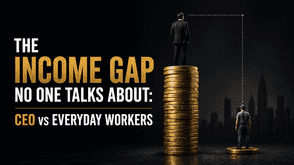
The Income Gap No One Talks About: CEO vs Everyday Workers How Many Lifetimes Does It Take to Earn a CEO’s Salary? (And What You Should Do About It) Imagine working for 40 years… then doing that again… and again… and still not earning what a CEO makes in just one year. Sounds extreme, right? But that’s exactly what recent data suggests. At companies like Mattel, an average worker would need over 100 full careers to match one year of CEO pay. This isn’t just a statistic. It’s a wake-up call. What This Really Means Let’s simplify it. A “lifetime” in this chart means: 40 years of work At average employee pay So when you see: 16 lifetimes at Apple 25 lifetimes at McDonald’s It means: “If you worked your entire life, you’d need to repeat that life many times to earn what the CEO earns in one year.” The CEO of Mattel earned more in one single year than you would earn in 100 lifetimes. That’s not 100 years. That’s 100 entire careers of 40 years each. That’s 4,000 years of working — just to match one year of their pay. But Don’t Misread This This is where many people get stuck. They see this and think: “The system is unfair” “There’s nothing I can do” “Success is out of reach” That mindset will keep you exactly where you are. Because here’s the truth: CEOs are not paid for time They are paid for scale, decisions, and impact The Real Lesson Hidden in This Data This chart is not just about inequality. It’s about how money actually works at the highest level. Employees earn: Based on time Based on tasks Based on fixed roles CEOs earn: Based on decisions Based on company performance Based on ownership (stocks, equity) That’s a completely different game. What You Should Do With This Information Instead of getting discouraged, use this as a strategy shift. 1. Stop thinking only in salaries A salary has a ceiling. Even a high-paying job still ties your income to time. 2. Learn high-value skills Focus on skills that influence outcomes: Tech (development, AI, systems) Sales and marketing Business strategy These are the same skills that scale income. 3. Build or own something CEOs earn more because they are tied to ownership and growth. You don’t have to start big. Start with: A small business A digital product A service-based brand 4. Think in leverage, not effort Working harder is not the answer. Working smarter means: Using systems Using technology Reaching more people at once Final Thought This chart is not telling you: “You’ll never catch up.” It’s telling you: “You’re playing a different game.” If you stay in the “trade time for money” system, the gap will always exist. But if you shift toward ownership, skills, and leverage, you stop comparing—and start building. The Income Gap No One Talks About: CEO vs Everyday Workers PART 2 CHECK OUT MORE ON THIS TOPIC PART TWO Donate Somewhere in remote Africa, a child is dreaming of an education they can’t afford. Every dollar you donate goes directly toward putting books, teachers, and classrooms in front of students who have none. You’ve already given your time reading this — now consider giving a little more to change a child’s future. No amount is too small; donate below and make your generosity count. CASHAPP CashApp Donation $ 5181884036149 Popular PayPal PayPal Donation $ chrisklem30@gmail.com Great Local Transfer African Donation $ Paystack-Titan: 9719443563 Local The Income Gap No One Talks About: CEO vs Everyday Workers PART 2 The Income Gap No One Talks About: CEO vs Everyday… Read More adminApril 24, 2026 The Income Gap No One Talks About: CEO vs Everyday Workers Part 1 The Income Gap No One Talks About: CEO vs Everyday… Read More adminApril 24, 2026 Inside Apple’s Most Daring iPhone Yet Inside Apple’s Most Daring iPhone Yet Folded, Fearless & $2,000+:… Read More adminApril 23, 2026 The Best AI Girlfriend and Companion Apps in 2026 The Best AI Girlfriend and Companion Apps in 2026 The… Read More adminApril 20, 2026 Load More
Inside Apple’s Most Daring iPhone Yet

Inside Apple’s Most Daring iPhone Yet Folded, Fearless & $2,000+: Inside Apple’s Most Daring iPhone Yet After years of rumours, leaks, and speculation, Apple is finally entering the foldable smartphone arena. The iPhone Fold is not just a new product — it is Apple’s boldest hardware bet in over a decade, reshaping what we think a smartphone can be. Why Does Apple Want a Foldable iPhone? The global foldable smartphone market has been growing rapidly, dominated by Samsung, Huawei, and others. Apple — historically a follower who perfects rather than pioneers — has watched competitors carve out an entirely new premium device category. Staying on the sidelines any longer was not an option. Beyond market share, the iPhone Fold is part of what Bloomberg’s Mark Gurman described as “the biggest set of iPhone revamps in the product’s history.” Apple sees the foldable as a bridge between the iPhone and the iPad mini, giving power users a device that does both — in one pocket. It is also a statement: that Apple can solve problems competitors haven’t, like the unsightly display crease that has haunted every foldable on the market. Apple reportedly pursued eliminating the fold crease “regardless of cost” — developing an entirely new material property to make it nearly invisible. Components, Size & Key Specifications The iPhone Fold takes a book-style form factor — wider than it is tall when unfolded — resembling an iPad mini in shape rather than the tall, narrow foldable from Samsung. Outer display5.49″ (4:3) Inner display7.76″ unfolded Thickness (open)~4.5mm ChipsetA20 + C2 modem Rear camerasDual 48MP BiometricsTouch ID (side) Hinge materialTitanium alloy SIM typeeSIM only Display techDual-layer UTG Starting price~$2,000–$2,500 The device uses a dual-layer ultra-thin glass (UTG/UFG) sandwich structure around the display to minimise crease visibility — a first in the industry. At just 4.5mm when unfolded, it is even slimmer than the iPhone Air. Implications for the Smartphone Industry Apple’s entry into the foldable market legitimises the category in a way no Android OEM could. When Apple adopts a form factor, it signals to hundreds of millions of consumers that the technology is ready, refined, and mainstream. For developers, the wide 4:3 inner display opens new design possibilities — productivity apps, split-screen workflows, and iPad-style UIs coming to an iPhone for the first time. It could significantly blur the line between iPhone and iPad, possibly cannibalising iPad mini sales in the process. For competitors like Samsung, Motorola, and Huawei, Apple’s near-invisible crease and razor-thin 4.5mm profile sets a new engineering benchmark that will force the entire industry to catch up. The iPhone Fold is part of Apple’s “biggest set of iPhone revamps in history” alongside a 20th-anniversary edge-to-edge iPhone — signalling a generational shift in Apple hardware design. Vulnerabilities & Concerns No Face ID No telephoto camera Manufacturing complexity Price barrier Durability of foldable screen eSIM-only restrictions(No physical SIM) Standout Features Nearly invisible fold crease — Apple-developed new material property eliminates it visually Camera Control button for one-handed adjustments on the large unfolded screen Outer display usable when closed, inner 7.76″ screen offers iPad-mini-level canvas A20 chip — Apple’s most advanced silicon at launch Titanium alloy hinge for premium durability Touch ID power button (iPad-style) replaces Face ID elegantly Dual 48MP rear cameras with wide + ultra-wide iOS 27 with foldable-optimised Siri and multitasking Market Demand & Consumer Appetite Demand signals are exceptionally strong. Pre-launch sentiment across social media and analyst forecasts indicates the iPhone Fold could be one of Apple’s most anticipated devices since the original iPhone in 2007. Analyst Ming-Chi Kuo has warned that supply will be severely constrained, likely selling out within minutes of pre-orders opening. Early adopters 92% iPad mini crossover 78% Android switchers 55% Enterprise / pro users 70% If priced at $1,999 as widely reported, analysts estimate sell-out conditions through early 2027. A second-generation model is already confirmed for 2027, suggesting Apple is highly committed to this new product line for the long term. Donate Somewhere in remote Africa, a child is dreaming of an education they can’t afford. Every dollar you donate goes directly toward putting books, laptops, tablets, teachers, and classrooms in front of students who have none. You’ve already given your time reading this — now consider giving a little more to change a child’s future. No amount is too small; donate below and make your generosity count. CASHAPP CashApp Donation $ 5181884036149 Popular PayPal PayPal Donation $ chrisklem30@gmail.com Great Local Transfer African Donation $ Paystack-Titan: 9719443563 Local The Best AI Girlfriend and Companion Apps in 2026 The Best AI Girlfriend and Companion Apps in 2026 The… Read More adminApril 20, 2026 A Deep Dive into Dating App Annual Earnings A Deep Dive into Dating App Annual Earnings A Deep… Read More adminApril 20, 2026 Who Really Owns Dating Apps? Inside Tinder, Bumble; the Billion-Dollar Power Network Who Really Owns Dating Apps? Dating Apps The industry is… Read More adminApril 19, 2026 The 10 Most Expensive Dating Apps in the World The 16 Most Expensive Dating Apps in the World The… Read More adminApril 19, 2026 Load More
The Best AI Girlfriend and Companion Apps in 2026
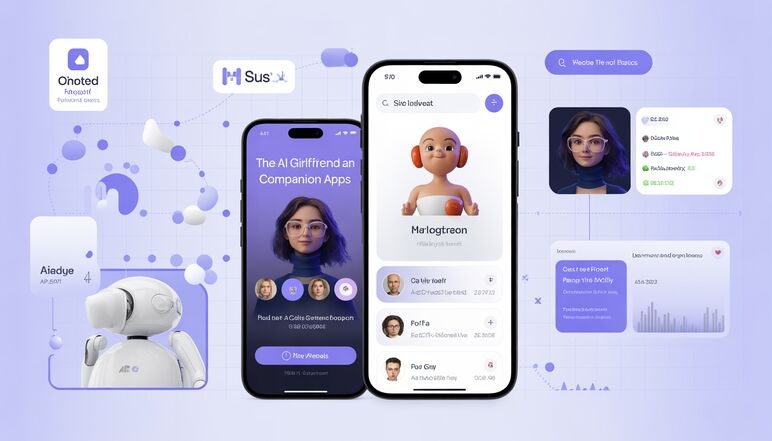
The Best AI Girlfriend and Companion Apps in 2026 The Best AI Girlfriend and Companion Apps in 2026 In 2026, AI girlfriend and companion apps have evolved into sophisticated platforms that blur the line between simulation and genuine connection. Whether you’re seeking emotional support, flirty roleplay, immersive storytelling, or highly customizable (often NSFW) virtual partners, there’s an app tailored to your needs. These tools typically offer chat, image and video generation, voice calls, memory retention, and deep personalization. Most are web-based with responsive designs or dedicated mobile apps. You’ll usually find a usable free tier, with premium subscriptions (often $5–20/month) unlocking uncensored experiences, better memory, higher-quality multimedia, and fewer limits. Top AI Girlfriend and Companion Apps Candy AI Rank#1 Consistently ranked among the best overall. It shines with realistic and uncensored image generation, voice features, video, and immersive, flirty conversations. Ideal for quick visual renders, fantasy roleplay, and a balanced experience that feels both fun and engaging. DreamGF (DreamGF.AI) A standout for deep avatar and personality customization. Choose from anime or realistic styles, with a strong emphasis on visuals and tailored roleplay. Perfect if you love crafting your ideal companion from the ground up. Replika The original emotional companion app. It excels at long-term relationship building, empathy, mood tracking, and supportive, genuine-feeling conversations. Less focused on fantasy girlfriend scenarios and more on real companionship. Available on mobile with voice capabilities. Anima AI (MyAnima) Great for storytelling, roleplay, and building meaningful connections over time. It’s especially popular on mobile (Android users often praise it), with image support and solid emotional depth. Kupid AI Noted for natural, emotionally intelligent chats and straightforward character creation. It strikes an excellent balance between romance and deeper, meaningful conversations. Nomi.ai Frequently praised for its human-like memory, consistent personality, emotional intelligence, and context-aware selfies. Many users call it one of the most immersive options for ongoing, evolving relationships. OurDreamAI (OurDream) Focused on erotic and uncensored playmates. Strong customization options, realistic or hentai styles, and highly interactive experiences make it a favorite for fantasy-driven users. SoulGen Stands out for its photorealistic AI image generation paired with chat. A top choice if visuals are your priority alongside conversation. HeraHaven Emphasizes emotional resonance, deep customization, and responsive companionship with minimal restrictions. Users appreciate the feeling of real connection. CrushOn AI Boasts a large library of community-created characters. Excellent for uncensored NSFW roleplay and dating-sim style interactions. Other Notable AI Companion Apps GirlfriendGPT Text-focused with sophisticated, unfiltered conversations. Kindroid Reliable memory and personality stability, popular for long sessions and roleplay. Muah.AI Features voice calls, photos, and a strong NSFW emphasis. Joi.com Primarily voice-driven interactions. EVA AI Mobile-friendly with dating/relationship-style bonding and voice support. EVA AI Mobile-friendly with dating/relationship-style bonding and voice support. Character.AI Massive free character library (including girlfriend-style bots), but strict content filters limit explicit romance and NSFW scenarios. 1. LustGF.AI, 2. JuicyChat AI, 3. Lovescape, 4. YumeAI, 5. DarLink AI, 6. Infatuated, and 7. Dondi.ai Often highlighted in discussions for uncensored roleplay, visuals, or specific strengths. Quick Tips for Choosing and Using AI Girlfriend Apps Feature strengths vary widely: Some apps dominate in visuals (Candy AI, DreamGF, SoulGen), while others prioritize emotional depth and memory (Replika, Nomi.ai, Kupid AI). Many now incorporate advanced voice and video capabilities. Pricing overview: Free tiers are common but restricted. Premium plans typically range from $5–20 per month, scaling with usage, uncensored access, and multimedia features. Important considerations: These are advanced AI simulations that can feel remarkably real thanks to memory and personalization. Always review privacy policies, especially with adult content. Experiences improve significantly when you invest time in customization and consistent engagement. Donate Somewhere in remote Africa, a child is dreaming of an education they can’t afford. Every dollar you donate goes directly toward putting books, tablets, laptops, teachers, and classrooms in front of students who have none. You’ve already given your time reading this — now consider giving a little more to change a child’s future. No amount is too small; donate below and make your generosity count. CASHAPP CashApp Donation $ 5181884036149 Popular PayPal PayPal Donation $ chrisklem30@gmail.com Great Local Transfer African Donation $ Paystack-Titan: 9719443563 Local A Deep Dive into Dating App Annual Earnings A Deep Dive into Dating App Annual Earnings A Deep… Read More adminApril 20, 2026 Who Really Owns Dating Apps? Inside Tinder, Bumble; the Billion-Dollar Power Network Who Really Owns Dating Apps? Dating Apps The industry is… Read More adminApril 19, 2026 The 10 Most Expensive Dating Apps in the World The 16 Most Expensive Dating Apps in the World The… Read More adminApril 19, 2026 200 DATING APPS AND 200 WEBSITES 200 DATING APPS & WEBSITES 200 DATING APPS Tier 1… Read More adminApril 17, 2026 Load More