The Biggest AI Problem in Africa May Not Be AI
The Biggest AI Problem in Africa May Not Be AI Artificial intelligence (AI) is moving fast. Chatbots can write, software can generate code, computers can analyse medical information, and businesses are using AI to automate work that once required hours of human effort. Africa wants to be part of this transformation. And it should. But there is a problem we don’t talk about enough: You cannot build an AI-powered economy on digital infrastructure that is not strong enough to support it. The biggest AI problem in Africa may not be the AI itself. It may be electricity, internet access, computing power, skills and affordability. AI needs more than an app It is easy to think of AI as simply opening ChatGPT or another AI tool on your phone. But behind that simple screen is a huge technical system. AI models run on computers called servers. Servers are powerful computers that provide services and process information for other computers and users. Large AI systems require enormous amounts of compute, meaning computing power used to train and run AI models. These machines live in data centres — buildings filled with computers, networking equipment, cooling systems and power infrastructure. And all of this needs electricity. So when we ask whether Africa is ready for AI, we should not only ask: “How many people are using AI?” We should also ask: “Do we have the infrastructure to make AI widely useful and affordable?” 1. Electricity comes first This is the most basic problem. Computers need electricity. Data centres need a lot of electricity. AI systems need computing infrastructure, and computing infrastructure cannot operate without reliable power. The International Energy Agency (IEA) reported that electricity consumption by data centres increased by 17% globally in 2025, while electricity use by AI-focused data centres grew even faster. That matters for Africa because AI is not just about buying software. If a country wants to develop serious AI infrastructure, it needs reliable electricity to operate the physical machines behind it. This does not mean every African country needs to build giant AI data centres tomorrow. It means reliable and affordable electricity is part of the AI conversation. 2. The internet is still a barrier AI also needs connectivity. A person cannot use an online AI service effectively if their internet connection is unreliable, extremely slow or too expensive. The World Bank describes connectivity as the gateway to AI participation and highlights continuing differences in internet affordability, speed and usage between countries. The problem is therefore bigger than simply saying: “Africa needs more internet users.” People need internet connections that are good enough to actually use modern digital services. And they need devices capable of accessing those services. 3. Then there is compute This is one of the most important terms in the entire AI conversation. Compute simply means computing power. Think of it as the muscle that allows computers to perform difficult calculations. Modern AI systems can require specialised processors called GPUs, or Graphics Processing Units. GPUs are computer chips that can perform many calculations at the same time, making them particularly useful for AI workloads. The problem is that advanced computing capacity is heavily concentrated outside Africa. The United Nations Conference on Trade and Development (UNCTAD) says AI infrastructure requires computing power, servers and data centres, and notes that most supercomputers and data centres are located in developed countries. The World Bank also identifies compute as one of the major foundations needed for inclusive AI development. This creates an uncomfortable question: If Africa does not have enough affordable access to compute, how much AI can it build locally? Cloud computing — renting computing resources over the internet instead of owning the physical machines — can help. But relying heavily on computing infrastructure elsewhere also means Africa remains dependent on infrastructure it does not control. That is why compute is becoming a strategic issue. 4. Africa needs people who understand AI Hardware alone will not solve the problem. You can build a data centre and still have a shortage of people who know how to use, manage and develop the technology. AI needs different levels of skills. People need basic digital literacy, meaning the ability to confidently use digital devices and services. Businesses need people who understand how to apply AI to real problems. And advanced AI development requires specialists in areas such as machine learning (ML) — a branch of AI where computers learn patterns from data — as well as data science, software engineering and related fields. The African Development Bank’s recent AI roadmap identifies skills as one of the major foundations of Africa’s AI readiness and proposes a target of 3 million AI-capable professionals by 2030. This is why AI education cannot only be about teaching people how to write better prompts. People also need to understand how AI works, where it can be used, its limitations and how to build with it. 5. And then comes affordability This may be the issue ordinary people feel most directly. AI may exist, but can people afford the internet, electricity, smartphones, computers and services needed to use it? There is a difference between AI being available and AI being accessible. A powerful AI tool is not particularly useful to a student who cannot afford enough data to use it. It is not very useful to a small business whose electricity and internet costs are already difficult to manage. And it is difficult for a developer to build sophisticated AI products if access to powerful computing resources is prohibitively expensive. UNCTAD identifies affordable electricity, internet access, computing power, devices and digital skills as important parts of the infrastructure required for AI adoption. Africa does not have to copy Silicon Valley There is another important point. Africa does not need to reproduce the exact AI infrastructure of the United States or China to benefit from AI. There are opportunities to build smaller, practical systems around African problems. For example, AI can be applied to agriculture, education, healthcare, financial
AI for Drug Discovery

AI for Drug Discovery How AI Is Changing the Search for New Medicines Imagine trying to find one useful molecule among millions of possibilities. That is one of the enormous challenges scientists face when developing new medicines. Traditionally, discovering and developing a drug can take many years and billions of dollars. Scientists have to identify promising molecules, test them, study their safety, and eventually put successful candidates through human clinical trials. Now, artificial intelligence is changing one of the earliest and most difficult parts of that journey. What Is Drug Discovery? Before a medicine reaches a pharmacy, scientists need to discover a compound that could potentially treat a disease. They might ask: Can this molecule interact with a disease-related protein? Could it stop a virus from multiplying? Could it block a process that causes cancer? Is it likely to be safe? There can be millions of possible compounds to investigate. Scientists cannot physically test all of them. This is where AI becomes useful. AI Becomes a Molecular Detective AI can analyse enormous amounts of biological and chemical data and identify patterns that would be difficult for humans to spot manually. Researchers can train AI models using information about: molecules and their structures proteins diseases previous drug experiments genetic information biological interactions The system can then help predict which molecules are worth investigating. Instead of asking scientists to search through an enormous haystack, AI can help them identify where the most promising needles might be. But there is an important distinction: AI makes predictions. Scientists still have to prove whether those predictions are correct. From Millions of Possibilities to a Few Candidates A simplified AI-assisted drug discovery process looks something like this: Disease → Biological target → AI analysis → Candidate molecules → Laboratory testing → Clinical trials → Approval AI can help at several points along this journey. It can help researchers identify biological targets, predict how molecules might interact with proteins, design or modify potential drug candidates, and prioritise which compounds should be tested first. This can save researchers enormous amounts of time and laboratory resources. Protein Folding Changed the Game One of the biggest breakthroughs in this area came from understanding proteins. Proteins perform many important jobs inside living organisms. Their three-dimensional shapes influence how they work and how potential medicines interact with them. Predicting these structures has historically been extremely difficult. AI systems such as AlphaFold demonstrated how machine learning could predict protein structures at remarkable scale. This has given researchers another powerful source of information when investigating diseases and potential treatments. The significance is bigger than simply “AI can predict proteins.” It means researchers can increasingly combine biology, chemistry and computation when searching for new medicines. AI Is Already Being Used in Drug Research AI drug discovery is no longer just a futuristic idea. Pharmaceutical companies, biotechnology companies and academic researchers are using machine learning and other computational methods to support research into areas such as: Cancer AI can help researchers analyse tumour biology, identify potential drug targets and investigate combinations of treatments. Antibiotic Resistance Drug-resistant bacteria are becoming a serious global health challenge. AI can help researchers search for molecules with antibacterial properties, including candidates that may have been difficult to identify using traditional approaches. Rare Diseases Some rare diseases have relatively small patient populations, making research difficult and expensive. AI could help researchers analyse existing biological data and identify potential treatment opportunities more efficiently. Neurological Diseases Researchers are using AI to study complex biological systems involved in diseases such as Alzheimer’s and Parkinson’s. The important point is that AI does not magically cure these diseases. It helps researchers search, analyse and prioritise. What AI Cannot Do This is where some AI headlines become misleading. AI does not simply create a medicine and send it to a pharmacy. A promising computer prediction still has to survive reality. Scientists need to determine whether a candidate actually works, whether it is toxic, how it behaves in the body, what dose is appropriate, and whether it is safe for humans. Eventually, potential medicines must go through carefully controlled clinical trials and regulatory review. So the future isn’t really: AI replaces scientists. It is closer to: AI + scientists + laboratories + clinical research. AI may handle enormous amounts of computation while humans provide scientific judgement, experimentation, safety oversight and accountability. The Problem With “AI Makes Drugs in Days” You may see headlines claiming that AI can discover a drug in days or months. Be careful with those claims. AI can dramatically accelerate parts of the discovery process, particularly computational screening, prediction and molecule design. But developing an approved medicine is much bigger than finding a promising molecule. The candidate still has to be tested. And testing takes time. This distinction will become increasingly important between 2026 and 2030, as more AI-designed or AI-assisted drug candidates move through clinical development. The real opportunity is not necessarily turning a decade-long process into a few days. It is making the search for promising candidates faster, more targeted and potentially less expensive. The Next Few Years Could Be Very Interesting Between 2026 and 2030, expect AI to become more deeply integrated into pharmaceutical research. We are likely to see: More AI-designed or AI-assisted drug candidates entering clinical trials Better models for predicting molecular interactions Greater use of AI in personalised medicine More integration of genomic, biological and clinical data AI-assisted research into rare and neglected diseases Increasing use of automated laboratory systems alongside AI The biggest shift may be the combination of AI software with automated laboratories. Instead of AI simply making a prediction, future systems can increasingly follow a cycle: Predict → Experiment → Measure → Learn → Predict again That creates a much faster research loop. But There Are Serious Questions More powerful technology also creates difficult questions. Who owns medicines created with AI? Will AI-designed treatments be affordable? Are the datasets used to train these systems representative of different populations? Could biased or incomplete data produce unreliable
The Income Gap No One Talks About: CEO vs Everyday Workers PART 2

The Income Gap No One Talks About: CEO vs Everyday Workers PART 2 Why This Matters to You — Even If You’re Not a CEO If You Work for Someone Else: 1. Know your worth — and negotiate like you mean it. Most workers never negotiate their salary. They accept the first offer. They wait to be told they deserve more. But the gap shown in this chart didn’t happen by accident — it grew because those at the top negotiate aggressively, and those at the bottom don’t. Start negotiating every opportunity you get. A 10% raise compounding over a career is worth hundreds of thousands of dollars. 2. Build income outside your job. Your salary is someone else deciding what you’re worth. It’s capped. It can be taken away. The chart shows clearly that the employee-employer relationship is deeply unbalanced at the top. This doesn’t mean your employer is evil — but it is a strong reason to build a side income, invest, or start something small on the side. 3. Invest — because your time has a ceiling, but your money doesn’t. A worker’s income is limited by hours. A CEO’s compensation often includes massive stock awards that grow whether they’re working or sleeping. You can access the same compounding power through investments — even small ones, started early. Time in the market beats timing the market. If You Run a Business: 1. Pay attention to how you compensate your team. The companies on this chart are facing growing public anger, talent issues, and reputational risk because of extreme pay gaps. You don’t have to be a saint — but treating your people well has a measurable ROI: lower turnover, higher loyalty, stronger culture. Businesses that share value with employees tend to build more durable companies. 2. Your value as a business owner is closer to the CEO than the worker — protect it. The chart also shows what business ownership can unlock. CEOs are compensated like owners because they’re treated like owners. As a business owner, you have something rare: leverage. Your income isn’t purely tied to your hours. Protect that leverage — don’t undercharge, don’t undervalue your offer, and don’t run your business like an underpaid employee of yourself. 3. Build systems, not just services. The reason CEOs earn so much more than workers is leverage — they sit at the top of systems that multiply their decisions. As a small business owner, you can create the same principle at your scale: document your processes, hire or delegate, build things that work without you. The more your business runs on systems rather than just your personal effort, the more your time becomes truly valuable. The Simple Takeaway The chart isn’t meant to make you angry (though it might). It’s data showing something important: The gap between those who own and those who only work is enormous — and it’s growing. You have a choice about which side of that gap you stand on. Not by becoming a Fortune 500 CEO (most people won’t), but by: Building skills that are rare and valuable Owning assets — investments, a business, property Negotiating your worth instead of accepting whatever you’re given Creating multiple streams of income so no single person controls your financial life The 40-year worker in that chart isn’t a failure. They showed up. They contributed. But the system rewards ownership and leverage far more than it rewards time and effort alone. The smartest thing you can do with this information is act on it — starting today, at whatever scale you can. Donate Somewhere in remote Africa, a child is dreaming of an education they can’t afford. Every dollar you donate goes directly toward putting books, laptops, tablets, teachers, and classrooms in front of students who have none. You’ve already given your time reading this — now consider giving a little more to change a child’s future. No amount is too small; donate below and make your generosity count. CASHAPP CashApp Donation $ 5181884036149 Popular PayPal PayPal Donation $ chrisklem30@gmail.com Great Local Transfer African Donation $ Paystack-Titan: 9719443563 Local The Income Gap No One Talks About: CEO vs Everyday Workers PART 2 The Income Gap No One Talks About: CEO vs Everyday… Read More adminApril 24, 2026 The Income Gap No One Talks About: CEO vs Everyday Workers The Income Gap No One Talks About: CEO vs Everyday… Read More adminApril 24, 2026 Inside Apple’s Most Daring iPhone Yet Inside Apple’s Most Daring iPhone Yet Folded, Fearless & $2,000+:… Read More adminApril 23, 2026 The Best AI Girlfriend and Companion Apps in 2026 The Best AI Girlfriend and Companion Apps in 2026 The… Read More adminApril 20, 2026 Load More
The Income Gap No One Talks About: CEO vs Everyday Workers Part 1

The Income Gap No One Talks About: CEO vs Everyday Workers How Many Lifetimes Does It Take to Earn a CEO’s Salary? (And What You Should Do About It) Imagine working for 40 years… then doing that again… and again… and still not earning what a CEO makes in just one year. Sounds extreme, right? But that’s exactly what recent data suggests. At companies like Mattel, an average worker would need over 100 full careers to match one year of CEO pay. This isn’t just a statistic. It’s a wake-up call. What This Really Means Let’s simplify it. A “lifetime” in this chart means: 40 years of work At average employee pay So when you see: 16 lifetimes at Apple 25 lifetimes at McDonald’s It means: “If you worked your entire life, you’d need to repeat that life many times to earn what the CEO earns in one year.” The CEO of Mattel earned more in one single year than you would earn in 100 lifetimes. That’s not 100 years. That’s 100 entire careers of 40 years each. That’s 4,000 years of working — just to match one year of their pay. But Don’t Misread This This is where many people get stuck. They see this and think: “The system is unfair” “There’s nothing I can do” “Success is out of reach” That mindset will keep you exactly where you are. Because here’s the truth: CEOs are not paid for time They are paid for scale, decisions, and impact The Real Lesson Hidden in This Data This chart is not just about inequality. It’s about how money actually works at the highest level. Employees earn: Based on time Based on tasks Based on fixed roles CEOs earn: Based on decisions Based on company performance Based on ownership (stocks, equity) That’s a completely different game. What You Should Do With This Information Instead of getting discouraged, use this as a strategy shift. 1. Stop thinking only in salaries A salary has a ceiling. Even a high-paying job still ties your income to time. 2. Learn high-value skills Focus on skills that influence outcomes: Tech (development, AI, systems) Sales and marketing Business strategy These are the same skills that scale income. 3. Build or own something CEOs earn more because they are tied to ownership and growth. You don’t have to start big. Start with: A small business A digital product A service-based brand 4. Think in leverage, not effort Working harder is not the answer. Working smarter means: Using systems Using technology Reaching more people at once Final Thought This chart is not telling you: “You’ll never catch up.” It’s telling you: “You’re playing a different game.” If you stay in the “trade time for money” system, the gap will always exist. But if you shift toward ownership, skills, and leverage, you stop comparing—and start building. The Income Gap No One Talks About: CEO vs Everyday Workers PART 2 CHECK OUT MORE ON THIS TOPIC PART TWO Donate Somewhere in remote Africa, a child is dreaming of an education they can’t afford. Every dollar you donate goes directly toward putting books, teachers, and classrooms in front of students who have none. You’ve already given your time reading this — now consider giving a little more to change a child’s future. No amount is too small; donate below and make your generosity count. CASHAPP CashApp Donation $ 5181884036149 Popular PayPal PayPal Donation $ chrisklem30@gmail.com Great Local Transfer African Donation $ Paystack-Titan: 9719443563 Local The Income Gap No One Talks About: CEO vs Everyday Workers PART 2 The Income Gap No One Talks About: CEO vs Everyday… Read More adminApril 24, 2026 The Income Gap No One Talks About: CEO vs Everyday Workers Part 1 The Income Gap No One Talks About: CEO vs Everyday… Read More adminApril 24, 2026 Inside Apple’s Most Daring iPhone Yet Inside Apple’s Most Daring iPhone Yet Folded, Fearless & $2,000+:… Read More adminApril 23, 2026 The Best AI Girlfriend and Companion Apps in 2026 The Best AI Girlfriend and Companion Apps in 2026 The… Read More adminApril 20, 2026 Load More
What is Claude AI? A Beginner-Friendly Guide to Your New AI Assistant
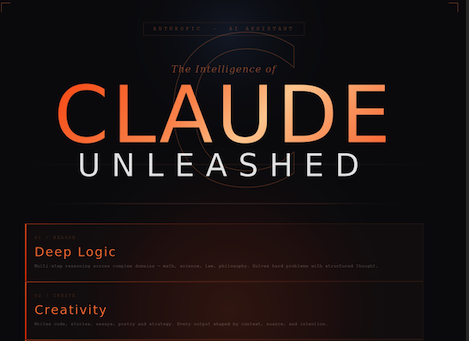
What is Claude AI? A Beginner-Friendly Guide to Your New AI Assistant So what is Claude? Claude is an AI assistant made by Anthropic — a company founded in 2021 by former OpenAI researchers who wanted to build AI that is not just smart, but genuinely safe and honest. Think of Claude as a super-intelligent writing partner, tutor, analyst, and coder — allrolled into one. 2021 Anthropic founded 200K token context window 175+ countries accessible Why is everyone talking? 🔥The Hype is Real Claude can read and summarize entire books, reports, or legal documents in seconds — not paragraphs, whole files. It writes essays, emails, code, scripts, and social posts that actually sound human (not robotic). It pushes back when you’re wrong — most AI just agrees with you. Claude will respectfully disagree. It admits when it doesn’t know something. Rare for AI. Refreshing for humans. Anthropic’s “Constitutional AI” means Claude is trained to be helpful, harmless, and honest — not just impressive. OpenAI vs Claude ChatGPT / OpenAI Massive popularity, great plugins, GPT-4 is powerful, but responses can feel “salesy” and overly complimentary. Sometimes confidently wrong. Monthly limits can frustrate free users. Claude / Anthropic Longer context window, more nuanced reasoning, better at long documents. Feels more like a thoughtful colleague. Prioritises accuracy over approval. Safety is baked in from day one. “I switched to Claude because it actually told me my business plan had a flaw instead of just hyping it up. That honesty saved me from a costly mistake.” — real sentiment from thousands of users online. Is it for kids? 👦Age Guide: Who Can Use It? Ages 10–14 Young LearnersHomework help, storytelling, science projects, coding basics. Claude makes learning fun — not boring. Always age-appropriate. Ages 15–18 Teens & High SchoolEssay writing, debate prep, college apps, creative writing, learning to code. A study partner that never judges. Adults & Pros Everyone ElseBusiness docs, legal summaries, coding, research, marketing copy, therapy-style journaling. The use cases are basically endless. Learn AI with Claude 📚Courses & Resources Anthropic doesn’t sell its own courses, but these officially recommended or widely used platforms teach Claude and AI skills — many for free. DeepLearning.AI — Prompt Engineering with Claude↗learn.deeplearning.aiAnthropic Prompting Guide (Official Docs)↗docs.anthropic.comClaude.ai — Start Using Claude Free Today↗claude.aiCoursera — AI Literacy & Claude-based courses↗coursera.orgUdemy — Claude & AI Tools for Beginners↗udemy.com Governments & Claude 🏛️Why the Government Wants In Claude isn’t just for individuals — Anthropic has signed deals with the U.S. government, intelligence agencies, and major institutions. Here’s why power structures are paying attention. 🔐 The CIA and U.S. Intelligence Community now use a secure, isolated version of Claude to analyze intelligence reports and complex documents without exposing classified data to the open internet. ⚖️ Legal and policy departments use it to draft, summarize, and cross-check long legislation and regulatory documents in minutes — work that used to take teams of lawyers weeks. 🏥 Healthcare agencies use Claude to assist with medical research synthesis, turning hundreds of studies into actionable summaries for faster decisions. 🛡️Defense and cybersecurity teams use AI reasoning to detect patterns in data that humans simply can’t process fast enough on their own. 💰Amazon invested $4 billion into Anthropic. Google put in billions more. When the world’s two largest cloud companies both bet on the same AI — governments notice. Real-world impact – What Is Claude Actually Used For? Business: Writing proposals, answering customer emails, building internal tools, summarizing board reports. Education: Personalized tutoring, lesson plan writing, instant feedback on essays, teaching coding step-by-step. Healthcare: Summarizing clinical research, writing patient-friendly explanations, assisting with admin documentation. Developers: Debugging code, writing full apps from scratch, reviewing pull requests, explaining complex logic. Creatives: Screenwriting, poetry, game design, social media strategy, brainstorming ideas, brand voice. Research: Digesting 200-page PDFs, comparing papers, structuring academic writing, citation help. Ready to try Claude yourself? It’s free to start. No credit card, no fluff. Just intelligence at your fingertips — right now. Start on Claude.ai ↗ Donate Somewhere in remote Africa, a child is dreaming of an education they can’t afford. Every dollar you donate goes directly toward putting books, teachers, and classrooms in front of students who have none. You’ve already given your time reading this — now consider giving a little more to change a child’s future. No amount is too small; donate below and make your generosity count. CASHAPP CashApp Donation $ 5181884036149 Popular PayPal PayPal Donation $ chrisklem30@gmail.com Great Local Transfer African Donation $ Paystack-Titan: 9719443563 Local
meta ai free tier features and limits 2025
Meta AI Free Tier in 2025 Meta AI Free Tier in 2025 Meta AI has solidified its position as one of the most accessible AI assistants in the world, primarily because it’s built directly into the apps nearly 4 billion people use daily: Facebook, Instagram, WhatsApp, and Messenger. By 2025, the core experience is designed to be always free, powered by the advanced Llama 3.2 model. This is excellent news for the average user, but as Meta rolls out its Meta AI+ subscription, it’s crucial to understand where the free tier shines and when you might hit a boundary. Here is a breakdown of the Meta AI free tier’s features and its limitations in 2025. Free Tier Features: Full Integration & Everyday AI The power of the Meta AI free tier lies in its seamless, friction-free integration across the Meta ecosystem. It requires no separate sign-up or payment—just your existing Meta account. Feature Description Availability 💬 Core Conversational AI Unlimited chatting, Q&A, translation, and text summarization. WhatsApp, Messenger, Instagram DMs, Facebook 🖼️ Standard Image Generation Generate images from text prompts (text-to-image) for posts or chats. Integrated into chats and post creation tools 🌐 Real-Time Web Grounding Access to up-to-date answers and information sourced from search partners like Bing. All chat interfaces 🧠 Base AI Model Powered by Llama 3.2, a general-purpose language model. All free access points 🔎 Enhanced Search Assists with topic discovery, answering queries directly in the Facebook search bar, and post writing. Facebook Feed & Search 🗣️ Basic Voice Interaction Interact with the AI using your voice for convenience. Meta AI app and Ray-Ban Meta glasses Limitation Of the Free Tier – (Where the Premium Models Step In) While the free access is comprehensive, Meta is positioning its paid tier, Meta AI+, for power users, content creators, and professionals. The limitations are designed to encourage upgrades for those with heavy-duty workflow needs. 1. Context and Reasoning Depth The most significant difference lies in the model and its memory capacity. Limit Category Free Tier (Llama 3.2) Upgrade/Premium Tier (Llama 3.3+) Context Window $sim 32,000$ tokens Up to $128,000$ tokens Reasoning Model Standard Llama 3.2 Llama 3.3 or Llama 3.3 High-Context (Enhanced reasoning) The Constraint: $32,000$ tokens is sufficient for a long chat, but the AI may “forget” details from a very long conversation or struggle to process huge blocks of text, like a multi-chapter document. The Upgrade: Premium models offer a significantly larger context window, enabling the AI to handle long-form reasoning, complex project-based work, and deep document analysis. 2. File and Document Handling The free tier is primarily conversation and image-focused, not document-focused. The Constraint: You cannot upload or analyze full documents such as PDFs, Word files, or large datasets. Only small images/screenshots (typically under $5$ MB) can be used as input. The Upgrade: The Meta AI+ trial/subscription will support uploads of full documents up to $50$ MB for analysis, summary, and Q&A. 3. Performance and Priority Usage during peak hours may see a difference in speed and reliability. The Constraint: Response speed is “Standard.” During high-traffic periods (like US business hours), you may experience slightly slower response times or capacity limits. The Upgrade: Premium users are expected to receive faster/priority inference (quicker responses) and priority access during periods of peak demand. 4. Advanced/Professional Features The free version is a consumer-grade tool, lacking professional workflow integrations. The Constraint: There is no API access for custom automation, and you won’t get access to advanced features like cross-platform content scheduling agents or higher-resolution image generation. The Upgrade: Meta AI+ is testing features like early access to scheduling agents for content creators and advanced brand tools for businesses. Would you like to stick with the free tier or opt for the Meta AI+? Other Links 11 Smart AI Apps That Are Helping Children With Their Assignments Around the World July 12, 2025 | by admin 11 Smart AI Apps That Are Helping Children With Their Assignments Around the World 11 Smart AI Apps That Are… Read More → 31 Companies Transitioning to AI in 2025: Free Tools and Features to Explore July 6, 2025 | by admin 31 Companies Transitioning to AI In 2025 31 Companies Transitioning to AI in 2025: Free Tools and Features to Explore… Read More → AI app for kids November 17, 2025 | by admin Phoenix Coding Competition AI APP FOR KIDS – The AI Apps That Are Transforming Learning for Kids! Are you ready… Read More → Donate Somewhere in remote Africa, a child is dreaming of an education they can’t afford. Every dollar you donate goes directly toward putting books, teachers, and classrooms in front of students who have none. You’ve already given your time reading this — now consider giving a little more to change a child’s future. No amount is too small; donate below and make your generosity count. CASHAPP CashApp Donation $ 5181884036149 Popular PayPal PayPal Donation $ chrisklem30@gmail.com Great Local Transfer African Donation $ Paystack-Titan: 9719443563 Local
The resources for learning how to code in Nigeria

The resources for learning how to code in Nigeria The resources for learning how to code in Nigeria In today’s fast-paced, technology-driven world, coding has become an essential skill for success. As Nigeria continues to grow and develop, it’s crucial that our youth are equipped with the skills necessary to thrive in this digital age. That’s why we’re excited to share with you the numerous resources available for learning how to code in Nigeria. Imagine a future where Nigerian youth are at the forefront of innovation, creating cutting-edge solutions to real-world problems. A future where they’re not just consumers of technology, but creators, driving growth and development in our great nation. This future is within reach, and it starts with coding. From online platforms like Codecademy and FreeCodeCamp, to coding bootcamps and training programs like Andela and TechQuest Nigeria, there are numerous resources available to help our youth learn how to code. Additionally, meetups and communities like Nigeria Python Community and Lagos JavaScript Meetup provide opportunities for networking, learning, and growth. As a parent, teacher, school proprietor or proprietress, you play a vital role in shaping the future of our youth. By introducing them to coding, you’re giving them the tools they need to succeed in an increasingly digital world. So why not start their coding journey today? If you’re a parent, teacher, school proprietor or proprietress and you desire to start this coding journey for your child or students, click here now to explore our curated list of resources and take the first step towards unlocking their future. Together, let’s empower the next generation of Nigerian innovators and change-makers! Click here Now Other Links AI app for kids Phoenix Coding Competition AI APP FOR KIDS – The AI… Read More adminNovember 17, 2025 meta ai free tier features and limits 2025 Meta AI Free Tier in 2025 Meta AI Free Tier… Read More adminNovember 17, 2025 11 Smart AI Apps That Are Helping Children With Their Assignments Around the World 11 Smart AI Apps That Are Helping Children With Their… Read More adminJuly 12, 2025 31 Companies Transitioning to AI in 2025: Free Tools and Features to Explore 31 Companies Transitioning to AI In 2025 31 Companies Transitioning… Read More adminJuly 6, 2025 Load More Donate Somewhere in remote Africa, a child is dreaming of an education they can’t afford. Every dollar you donate goes directly toward putting books, teachers, and classrooms in front of students who have none. You’ve already given your time reading this — now consider giving a little more to change a child’s future. No amount is too small; donate below and make your generosity count. CASHAPP CashApp Donation $ 5181884036149 Popular PayPal PayPal Donation $ chrisklem30@gmail.com Great Local Transfer African Donation $ Paystack-Titan: 9719443563 Local
How Coding Can Solve Real-Life Problems in Nigeria
How Coding Can Solve Real-Life Problems in Nigeria How Coding Can Solve Real-Life Problems in Nigeria Nigeria, a land of vibrant culture, resilient people, and untapped potential. But beneath the surface, lies a plethora of challenges that hinder progress. From inefficient healthcare systems to crippling traffic congestion, Nigerians face numerous real-life problems daily. However, there’s hope. Coding, the language of innovation, can be the game-changer Nigeria needs. Healthcare Accessibility Imagine a pregnant woman in rural Nigeria, struggling to access quality healthcare. Coding can bridge this gap. Telemedicine platforms, built by Nigerian developers, can connect patients with doctors remotely. Apps like “Dial-a-Doctor” already provide virtual consultations, reducing maternal mortality rates. Traffic Congestion Lagos, Nigeria’s economic hub, is notorious for gridlocks. Coding can optimize traffic flow. Intelligent transportation systems, utilizing real-time data and algorithms, can manage traffic lights and reduce congestion. Financial Inclusion Millions of Nigerians remain unbanked, excluded from financial opportunities. Coding enables innovative solutions. Mobile banking apps, such as “Paga” and “Opay“, provide financial services to underserved communities. Education Nigeria’s education sector faces numerous challenges. Coding can enhance learning experiences. E-learning platforms, like “Tuteria” and “Roducate“, offer accessible, quality education. Food Security Nigeria’s agricultural sector struggles with inefficiencies. Coding can streamline farm-to-table processes. Platforms like “Farmcrowdy” connect farmers with investors, improving food production and distribution. Coding is not just a technical skill; it’s a tool for change. By harnessing technology, Nigerian developers can create solutions that transform lives. Let’s empower the next generation of coders to tackle real-life problems. If you’re a parent, school owner, or teacher who wants pupils and students to start their coding journey, click here to get started! Other Links AI app for kids Phoenix Coding Competition AI APP FOR KIDS – The AI… Read More adminNovember 17, 2025 meta ai free tier features and limits 2025 Meta AI Free Tier in 2025 Meta AI Free Tier… Read More adminNovember 17, 2025 11 Smart AI Apps That Are Helping Children With Their Assignments Around the World 11 Smart AI Apps That Are Helping Children With Their… Read More adminJuly 12, 2025 31 Companies Transitioning to AI in 2025: Free Tools and Features to Explore 31 Companies Transitioning to AI In 2025 31 Companies Transitioning… Read More adminJuly 6, 2025 Load More Donate Somewhere in remote Africa, a child is dreaming of an education they can’t afford. Every dollar you donate goes directly toward putting books, teachers, and classrooms in front of students who have none. You’ve already given your time reading this — now consider giving a little more to change a child’s future. No amount is too small; donate below and make your generosity count. CASHAPP CashApp Donation $ 5181884036149 Popular PayPal PayPal Donation $ chrisklem30@gmail.com Great Local Transfer African Donation $ Paystack-Titan: 9719443563 Local
Why Your Business Needs a Website That Works on All Devices in Lagos
Why Your Business Needs a Website That Works on All Devices in Lagos Why Your Business Needs a Website That Works on All Devices in Lagos Have you ever tried to visit a website on your phone, but everything looked too small or messy? It’s really annoying, right? That’s why it’s super important for businesses in Lagos to have websites that look great on any device, whether it’s a phone, tablet, or computer. Let’s talk about why having a website that works on all devices is so important! What Does It Mean for a Website to Be “Responsive”? Okay, let’s imagine your favourite toy can change its shape to fit into different spaces, like a small box or a big bag. A responsive website is just like that! It changes its size and shape so that it looks good on any screen—big or small. So, whether you’re looking at the website on your phone, your mum’s tablet, or a computer, everything fits perfectly. In Lagos, lots of people are always on the go, using their phones to search for shops, restaurants, or fun things to do. If a business’s website doesn’t work well on a phone, those people might just leave the site and never come back! Why Is a Responsive Website Important for Businesses in Lagos? Lagos is a big, busy city with so many people looking for different things every day. Here’s why businesses in Lagos really need websites that work on all devices: Everyone’s Using Phones! Most people in Lagos use their phones to find what they need. If a website doesn’t work well on a phone, those people might get frustrated and leave. We don’t want that! It’s Easy to Use: Imagine trying to read tiny letters on a website or trying to click a small button that’s hard to reach. A responsive website makes everything easy to see and use, so people don’t get frustrated. Google Loves It: Google is like a big helper that finds websites for you. If a website works well on phones, Google will show it to more people when they search for something. That’s good news for businesses! It Loads Fast: No one likes waiting for a slow website to load, right? A responsive website loads quickly, so people don’t get bored and leave. Stay Ahead of Others: In Lagos, many businesses are making their websites responsive. If a business doesn’t do the same, they might fall behind. A cool, responsive website shows that the business is modern and cares about its customers. How Can a Responsive Website Help a Business? Having a website that works on all devices isn’t just about looking cool. It actually helps businesses in many ways: More People Buy Stuff: If a website is easy to use, people are more likely to buy something or ask for a service. A responsive website guides them step by step. Builds Trust: A well-designed website makes the business look trustworthy. People are more likely to choose a business that has a good-looking site. Reach More People: With a responsive design, everyone—whether on a phone, tablet, or computer—can visit the website easily. What Happens If a Website Isn’t Responsive? Let’s pretend a business has a website that only works well on a computer. What happens if someone tries to visit it from their phone? Frustration: The person might struggle to read the text or click the buttons. They’ll probably leave the website quickly because it’s too hard to use. Losing Visitors: If people keep leaving the site, Google will think the site isn’t helpful and stop showing it to others. That’s not good! Missed Chances: The business might lose potential customers to other businesses with responsive websites. No one wants to deal with a website that doesn’t work properly. Getting a Responsive Website Is Easy! If a business doesn’t have a responsive website yet, it’s not too late! Here’s how they can get started: Check the Current Website: They can look at how their website appears on different devices like phones, tablets, and computers. If it doesn’t look right, it’s time for a change! Ask for Help: A web design expert TGIM can help make the website responsive. They’ll make sure it looks great on all devices and works perfectly. Watch the Numbers: After making the site responsive, the business should check how many people visit from their phones. They’ll probably see more visitors staying longer! Conclusion: Don’t Wait—Make Your Website Responsive Today! Having a website that works on all devices isn’t just a good idea; every business in Lagos needs to do it. With so many people using their phones and tablets, a responsive website helps attract more customers, keeps them happy, and ensures the business stays ahead of the competition. So, if you know a business that doesn’t have a responsive website yet, tell them to fix it now! It’s time to make sure their website looks awesome on every screen. Other Links AI app for kids Phoenix Coding Competition AI APP FOR KIDS – The AI… Read More adminNovember 17, 2025 meta ai free tier features and limits 2025 Meta AI Free Tier in 2025 Meta AI Free Tier… Read More adminNovember 17, 2025 11 Smart AI Apps That Are Helping Children With Their Assignments Around the World 11 Smart AI Apps That Are Helping Children With Their… Read More adminJuly 12, 2025 31 Companies Transitioning to AI in 2025: Free Tools and Features to Explore 31 Companies Transitioning to AI In 2025 31 Companies Transitioning… Read More adminJuly 6, 2025 Load More Donate Somewhere in remote Africa, a child is dreaming of an education they can’t afford. Every dollar you donate goes directly toward putting books, teachers, and classrooms in front of students who have none. You’ve already given your time reading this — now consider giving a little more to change a child’s future. No amount is too small; donate below and make your generosity count. CASHAPP CashApp Donation $ 5181884036149 Popular
AI-Powered Design Tools Free

AI-Powered Design Tools Free AI-Powered Design Tools Free Are you tired of feeling stuck in a design rut? Do you dream of creating stunning visuals that leave a lasting impression? Well, you’re in luck because AI-powered design tools are here to save the day! In this blog post, we’ll dive into the amazing world of AI-powered design tools and explore how they can supercharge your creativity, boost your productivity, and help you create designs that truly wow. What are AI-Powered Design Tools? Imagine having a super-smart design assistant who can help you with everything from layout suggestions to colour palette generation. That’s what AI-powered design tools offer – a powerful combination of artificial intelligence and machine learning that can transform the way you design. These tools are designed to augment your creativity, not replace it. They’re like having a really smart friend who’s good at design, but instead of being a person, it’s a computer program! How Can AI-Powered Design Tools Help Me? So, what can these tools do for you? Here are just a few examples: – Automated layout suggestions: Get inspiration for your design layout and save time on tedious adjustments. – Colour palette generation: Discover unique colour combinations that will make your design pop. – Image editing and enhancement: Give your images a professional touch with AI-powered editing tools. – Content creation and writing: Get help with writing and content generation to complement your design. Real-Life Examples of AI-Powered Design Tools What do these tools look like in action? Here are a few examples: Adobe Fresco: A drawing and painting app that uses AI to help you create stunning artwork. Canva: A graphic design platform that uses AI to suggest layouts, colours, and fonts. Wix: A website builder that uses AI to help you create professional-looking websites. Sketch: A digital design tool that uses AI to help you create wireframes and prototypes. Figma: A UI/UX design tool that uses AI to help you create collaborative designs. Prisma: An app that uses AI to transform your photos into works of art. Tailor Brands: A logo design tool that uses AI to help you create custom logos. 99designs: A design platform that uses AI to help you create custom designs. GoDaddy: A website builder that uses AI to help you create professional-looking websites. Weebly: A website builder that uses AI to help you create custom websites. Squarespace: A website builder that uses AI to help you create stunning websites. Visme: A design tool that uses AI to help you create custom graphics and designs. Infogram: A design tool that uses AI to help you create custom infographics. Piktochart: A design tool that uses AI to help you create custom charts and graphs. Venngage: A design tool that uses AI to help you create custom infographics. Lucidpress: A design tool that uses AI to help you create custom designs and documents. Crello: A design tool that uses AI to help you create custom graphics and designs. Desygner: A design tool that uses AI to help you create custom designs and graphics. Stencils: A design tool that uses AI to help you create custom designs and graphics. GraphicSprings: A design tool that uses AI to help you create custom logos and designs. Logojoy: A logo design tool that uses AI to help you create custom logos. DesignEvo: A logo design tool that uses AI to help you create custom logos. Looka: A logo design tool that uses AI to help you create custom logos. Renderforest: A design tool that uses AI to help you create custom videos and animations. Lumen5: A design tool that uses AI to help you create custom videos and animations. AI Design Tools That’s 100% Free But With Limited Features Canva (free version with limited features) Piktochart (free version with limited features) Venngage (free version with limited features) Crello (free version with limited features) Desygner (free version with limited features) Stencils (free version with limited features) Prisma (free app with ads) Donate Somewhere in remote Africa, a child is dreaming of an education they can’t afford. Every dollar you donate goes directly toward putting books, teachers, and classrooms in front of students who have none. You’ve already given your time reading this — now consider giving a little more to change a child’s future. No amount is too small; donate below and make your generosity count. CASHAPP CashApp Donation $ 5181884036149 Popular PayPal PayPal Donation $ chrisklem30@gmail.com Great Local Transfer African Donation $ Paystack-Titan: 9719443563 Local